Friday, March 25, 2011

Project Restart: Hoarding Bokashi


[image from http://www.vendingmachineservices.co.uk/]


No, wait, I mean storing. Holding at a particular point until ready to use. Really. I may be something of a miser when it comes to finished vermicast, but all the other composts, plant foods, and rooting media are there to be used--I'll just make more. (Verne et cie would finish more vermicast, too, but only if I refrained from stealing their vermicompost at earlier stages. Which is unlikely.)


This winter past was unusual even for me, and there came a point when I had a bucket of mature bokashi and no post-bucket plans. No planter towers or Repulsive-and-Verne double-decker to feed; no soil conversion units; not even a bag of dried leaves.


It was not, at that point, cold enough to freeze, or I would have appropriated a filled leaf-and-lawn bag from the curbside pick-up, scooped out enough dry matter to make room for the bokashi, and then set the assembly under the porch until spring. If it had been reliably warmer, I might have stolen some worms back from one of the foster-folks and set up a new tower o'Verne. But winter in Austin being what it is, neither seemed likely to succeed.


Bokashi isn't stable at the point we consider finished. Really, it isn't even finished, though the microbes have (we hope!) wholly colonized the bucketed materials, eaten most of the available sugars, broken down some of the cellulose, and so on. My usual practice is to add different microbes at that point--thermophilic or otherwise--but if you left the bokashi alone in its closed container, it would continue to ferment awhile. After some time, the EM would die off, starved or poisoned depending, and other microbes would emerge.


Remember, bokashi works on a principle of dominance; those other microbes have always been in there, just dormant or incredibly slowed. In the absence of thriving EM, other available microbes suited to the environment take over. Those newly productive microbes might be molds, if the bokashi is on the dry side and has any air coming in, or fungi, but in a standard wettish closed bucket, what you get are the dreaded stink-producing anaerobes. I've done that, and there was no way I was going to risk it again!


But...what if you could balance the environment enough to slow everything down without adding any new elements? The dominant set would still be dominant, right?


I know from past experiments that newspaper works as a carbon source, but does not carry any of the necessary soil-borne microbes to start my usual second-stage composting. As I strongly prefer wholly composted bokashi--using the gardener's definition of the term: a product homogenous in appearance and safe to use as a primary element in potting media, as top-dressing, etc.--I hadn't bothered to do much with paper since determining that. It's useful to balance moisture in a bucket if you've got the volume to spare, won't impede the fermentation unless there's not much moisture to begin with, breaks down well enough once the composting starts but will slow the composting if allowed to clump or used in whole sheets, and there's no real difference between adding it during or after the fermentation. Overall, far inferior to dried leaves as a future-garden item, but since it's free and widely available, I expect it gets used far more in other people's buckets, and since it doesn't carry insect eggs, it's a better choice for indoor tests. (Assuming you've used all your shredded phone books, anyway.)


It might, I thought, serve to wick away just enough moisture to slow fermentation. So I split that one bucket of otherwise homeless mature bokashi between two buckets of hand-shredded paper, sandwiching each non-homogenous glob of ferment in a thick black-and-white nest, weighted one and wrapped both in plastic to ensure no additional airflow.


And then I waited. For months. I would have ended this test at the first sign of failure, of course, but when no such sign came...well, I'm lazy, and I was curious, so I let it keep going rather longer than I had planned. Almost three months in all.


The result is still a non-homogenous glob in a black-and-white nest, the weight creating a damper and more compact upper layer than the other but generally the same. It has a faintly disagreeable odor beneath a still-perceptible vinegar tang, and the pH is so nearly neutral that my standard low-tech tests don't register the difference. The literature isn't as clear on this point as I'd like, but generally tends to imply that this material would be safe to use as a subsurface fertilizer even in contact with roots at this point. To date, I have found exactly nothing about its suitability as a primary component of rooting medium for short-season crops--assuming your chosen additions addressed the stability and airflow concerns--but I figured I'd risk a few Verne-bits and a transplant or two on a real-world trial. So I scattered some vermicompost and dried leaves in the bottom of two planters, dumped my stored bokashi-and-paper atop that, then added a basic potting soil and blood-veined sorrel in one and a worm-seeded mix in the other, with a lavender.


Neither has died yet as of this posting, nor has there been a mass exodus of wrigglers, but at not quite a week from planting it's maybe still too early to say whether or not this is a success*. At least it wasn't a failure as far as the storage goes; and it might be worth trialing a bucket or two of fermentables cut into the retailer-recommended tiny pieces, fermented as usual and then mixed with cross-cut paper and sealed up again, to see how long it takes the pH to normalize that way. The resulting product still won't be as versatile as compost, but smaller bits mean less of an ick factor, and if paper and bokashi alone, in the absence of air, can be used to create a slow-release fertilizer suitable for use with food crops, just imagine how much cheaper start-up gardens might be!

--to be continued in another post, as there are a whole lot of words here and I'm not yet finished babbling. -G-

TTFN,

DSF


*First sighting of Repulsive's winged form this weekend. Not, I am happy to report, in or around either of those test planters. But one never knows what he (she, in this instance, but Repulsive is always male to me)gets up to when I'm not watching.

Sunday, March 20, 2011

Time to wake--oh, hai!


Warning: Repulsive image ahead.

.

.

.

.

...Still here? Well, at least you've been warned. Me, I had no clue. Took the lid off the rescue-attempt unit, and:


The fire and subsequent clearing destroyed my winterized double-decker BSFL-wormery; these relatively few grubs were all I could salvage, and they were sluggish with chill when I stuck them in their temporary home. Tossed in some food and some leaves so they could choose whether to eat or sleep, and pretty much forgot about them after the week of uninterrupted winter we suffered through this year; there wasn't much insulation in the improvised planter-and-weight assemblage, nor sufficient grub-mass to generate any heat worth considering, and I figured they were all either dormant or dead.

I should know better. Repulsive is as difficult to discourage as any movie-screen monster. (Not that I'm saying he's out for brains--though he would eat them if you offered! It's just that uncounted masses of quickly squirming things like King Ludwig's take on maggots rather irrestibly call cinema horrors to mind. Or is that just me? -G-)

Grub season is still officially two months away, but apparently Repulsive doesn't like naptime.

The Grub That Will Not Sleep. Does Gary Larsen write horror scripts, do you think?

DSF

Monday, February 28, 2011

Not a bright idea


Bokashi buckets are pretty much always wetter than the ideal--unless you're using a commercial juicer, maybe, or don't generate any waste beyond citrus peels. For the rest of us, the standard-model bucket with a false floor is a good idea. But it isn't always practical, so now and then I play with assorted moisture-regulation techniques.

Someone who shall remain nameless wondered if perhaps condensation of pure water could be encouraged and drained. What can I say, it seemed reasonable at the time; there was talk of a self-watering planter, you see...

Yes, bokashi buckets do generate condensation. Yes, that condensate is [much!] closer to neutral pH than bokashi juice. No, I will not be continuing this experiment.

Because, you see, something in the collection upset the microbial balance inside my test bucket. Instead of the usual this-volume-claimed-by-EM mass, I found pockets of proper bokashi interspersed with pockets where mold was the clear victor in the struggle for dominance. The overall character was of bokashi, so I tossed in a heroic dose of EM bokashi bran and crossed my fingers, but that licheny pale blue-green is not a color that belongs in the bucket. I'm not sure whether it was lack of moisture in those areas or perhaps a bit of intruding air that gave the mold spores their chance, but whatever it was, it has now been stopped, and I will not risk it again.

There are easier ways to water plants. And to keep the bokashi bucket's bottom from stagnating, too.

I do wonder about bio-char...

Saturday, February 19, 2011

Greener Bokashi


...that's “green” as in eco-, not mold, folks!

As such things go, bokashi's already pretty green. At-home bucket fermentation followed by composting, trenching, or use as animal feed diverts organics from landfill and reclaims nutrients that might otherwise be lost. The process uses no electricity and very little people-power, creates no waste beyond a bit of carbon dioxide if properly managed, and requires only a minimal investment in resources.

Minimal here being a relative term, of course. EM bokashi bran is a retail product, which must be manufactured (sort of), packaged (in packaging that must be manufactured), shipped, stored, and purchased. EM-1 and EM-Plus liquid inoculants likewise, though they require less packaging, shipping, etc. Some retailers use reclaimed bottles, others offer compostable plastic packaging for the EM bokashi bran, and my latest mail-order purchase came with cornstarch packing peanuts, so they're working on lessening the total environmental cost.

But every bokashi bucket I have ever seen for sale is plastic.

Some of them have EM mixed in, and those I'd really like to try some day, but for the most part, bokashi buckets are plastic because that's what cheapest, and there's just not that much money to spare in bokashi yet. Even so, the retail bokashi buckets aren't what I'd call cheap, just less expensive than hand-made porcelain with EM in the material.

(Which would be incredible. Any potters out there willing to give it a try?)

Among my circle of acquaintance are none of the uber-dedicated no-plastics folks, but several us of are trying to reduce the amount of plastic in our lives. We're giving up Tupperware for canning jars; have more fabric shopping bags than shirts (almost -G-), are dipping our toes into mesh bags for produce and have learned how to label tare weights on our reusable bulk-ingredient containers.

Bringing more plastic into our homes doesn't feel right any more. Personally, I make an exception for gardening since plastic containers are cheap or free and I really couldn't afford to grow as much of my food as I do without them. And bokashi is an integral part of my gardening these days, so it gets the same pass. But not all my friends are yet converted to the joys of bokashi—

—does that sound as cult-leaderish to everyone else as it does to me? Yikes!—

Anyway, I can't possibly ask my plastic-aware friends to give plastic buckets pride of place in their increasingly plastic-free homes. It's one thing to ask the gardeners if they'd be willing to foster a plastic bucket wearing a pillowcase hood out behind their garage, entirely another to insist they keep a cat litter bucket on their kitchen counter. With or without an industrial-sized spigot at the bottom.

So I've been playing with ceramic kitchen canisters. The white ones in the photo came from a local thrift store, and the set of three cost me $6.48. No spigots, so this isn't ideal for someone who wants a regular supply of liquid plant food/drain maintainer. But if you're not into bokashi juice... The clear plastic one was my trial, $1.08 from the dollar store, purchased so that I could make an informed recommendation about absorbent materials. (More than went in this batch!) Canisters can be purchased to match pretty much any décor, and they're much more discreet than even the commercial bokashi buckets, much less my home-cobbled versions. The gaskets prevent odor escape and insect entry, and as long as you're able to open them once a week during the two-week curing stage, don't seem to present any risk of re-enacting the Great Canning Disaster of '06 ™ . These don't offer much total capacity, but should be more than sufficient for the particular household; larger crocks are correspondingly more expensive, but a quick online search turned up several with prices comparable to the retail bokashi kits.

I have once or twice seen ceramic kombucha jars/vinegar jars/wide-mouthed ceramic beverage dispensers with non-metal spigots, and if I could afford a custom piece, I'd order one of those with a non-metal grate an inch above the bottom, plus an airtight lid in place of the filter-ring and cork. Though, actually, cork would work if the fit were sufficiently tight, you'd just have to be a little more careful about keeping the mouth clean.

Longer post than I intended. Takeaway message: bokashi doesn't have to be fermented in plastic containers. Ceramics work just fine. Strong glass can be used, with caution—I've taken to using a bubbler for AEM, and don't see any reason you couldn't use one for the bokashi as well. Metal won't work in the long run, since the acid will cause it to rust, but can be used for a few fermentations if that's what you've got. (I used a coffee can for a fermentation unit once, and have used metal sieves for false floors continuously for months before they rusted away. Presumably, metal sealed against oxidation would work even longer.) If you want to add bokashi to your life, it can be done even if you're avoiding plastics.

Ask your friendly neighborhood Cult of the Microbes representative today!

DSF
...who's obviously been drinking the Kool Aid EM-X water...

Sunday, February 13, 2011

Better than shredding


Pages from phone books end up in my post-bokashi scernarios a lot, but that's because they're here. I'd much rather not receive the plastic-wrapped doorstops at all.


Do. Not. Want.

Sunday, February 6, 2011

What's the thread count on that stuff?


It's edging on toward spring (despite Friday's snow!), and I'm making plans and preparations for the season's gardening. Just realized I haven't posted all that much about one of my favorite supplies here in the land of buckets, so here you go.


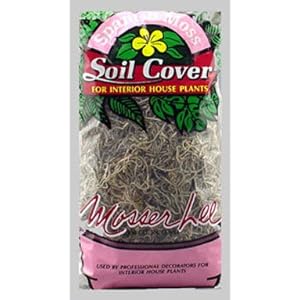
Spanish moss is pretty easy to find around here. It's at craft stores and floral shops, if you're in a retail mood--and online, naturally; today's image is from Amazon.com--or you can simply go pull it down from oak trees, free but for the labor. Fluffy, clean, and moisture-retaining, it's used as a mulch for potted plants and as a compostable rooting medium in some hydroponic systems.

Last year, I decided to see how it would do 1) as worm bedding; 2) in an ultra-low-tech vermiponics system; 3) in a traditional compost bin; 4) in post-bokashi quick composting; 5) as a carrier for microbes aka bokashi “bran”

Lost the specifics in the fire (the computer melted!), but here's what I found:

1) Worms love Spanish moss once it gets wet. They tangle themselves up in it and chow down. As bedding, sprinkled with soil and eggshell, it works as well as dried leaves, though the soil is necessary both for grit and microbes (I think; never tried a gritless wormery). Spanish moss is less prone to compaction than paper/cardboard bedding, and decomposes quickly except for a wiry residual structure. It also seems to encourage reproduction; that or fewer worms out-migrate from a unit with Spanish moss than one with other bedding materials. Or maybe both. Lots of worms of all sizes.

2) Spanish moss plus worms probably won't last through a long growing season, though it's fine for a short one. It is not wholly sufficient to nourish worms and plants without some additional food source, but both liquid (diluted bokashi juice) and solid (compost*) foods can be used with this system.

3) Spanish moss will break down in a bin, but provides no additional benefit over other dry materials so far as I can tell.

4) Spanish moss works to normalize moisture levels for quick, thorough composting, not as well as dried leaves (with their added freight of microbes) but far better than shredded phone book pages.

5) Spanish moss is not a reasonable substitute for bran, as it's too much work to resize and has a greater tendency to self-compost rather than simply fermenting.

I tried using it as a barrier against insects, but it's no help at all there; can't have everything, I suppose. Nor is it an odor-blocker. Out of curiosity, I put a thick layer of dried Spanish moss in the bottom of one planter, a few inches below root-level, and mixed a cup or so into the potting mix in another, to see if it would cause any nutrient sequestration—but then I forgot and fed those plants bokashi juice, so I can't say. (The nutrients in bokashi juice are so very bioavailable that I'm planning on testing it as a solitary nutrient source this year, with no soil or worms or anything.) I can say, however, that the moss was wholly decomposed by the time I repotted the plants, and the soil in both held water very well without bogging down.

In a spigot-alternative bucket, Spanish moss is less likely to heat up than fresh coir. It makes a really nice mid-ferment addition, too, in any bucket wet enough to have condensation on the lid. And what brought this post into being today was the mixing of equal volumes of Spanish moss and cured bokashi, that shall after a rest period be used to start this spring's first vermiponics unit. Soil-free gardening being one of my many fascinations, not entirely in anticipation of what some of my favorite bloggers have taken to calling TEOTWAWKI [The end of the world as we know it].

I'll be testing the pH of the mossy-bokashi mix before use, of course; verniponics -G- tolerances lie somewhere between soil and hydroponics, and I'd really rather not melt any worms or burn any roots. We shall see...

Dreaming of spring,

DSF


*Standard gardener's definition of compost; haven't yet tried bokashi without that additional step. This season, though...

A Repulsive new blog


Raise Soldier Flies.com

As backyard industries go, this one...seems to be doing pretty well. I admit to a serious case of NIMBY--both for the ick factor and because I know from experience that BSFL will eat my compost-in-progress, and I need my compost--but this is a great new resource for people interested in cultivating waste digesters on a large home-based scale.

(Cracks me up how many of the BSF folks go out and buy cracked corn to "sour" to use as bait for the things. Apparently, that's the standard local technique.)

Warning for the squeamish: photo- and video-heavy blog, necessarily including close-up images of larvae.