Showing posts with label EM bokashi bran. Show all posts

Monday, February 28, 2011

Not a bright idea


Bokashi buckets are pretty much always wetter than the ideal--unless you're using a commercial juicer, maybe, or don't generate any waste beyond citrus peels. For the rest of us, the standard-model bucket with a false floor is a good idea. But it isn't always practical, so now and then I play with assorted moisture-regulation techniques.

Someone who shall remain nameless wondered if perhaps condensation of pure water could be encouraged and drained. What can I say, it seemed reasonable at the time; there was talk of a self-watering planter, you see...

Yes, bokashi buckets do generate condensation. Yes, that condensate is [much!] closer to neutral pH than bokashi juice. No, I will not be continuing this experiment.

Because, you see, something in the collection upset the microbial balance inside my test bucket. Instead of the usual this-volume-claimed-by-EM mass, I found pockets of proper bokashi interspersed with pockets where mold was the clear victor in the struggle for dominance. The overall character was of bokashi, so I tossed in a heroic dose of EM bokashi bran and crossed my fingers, but that licheny pale blue-green is not a color that belongs in the bucket. I'm not sure whether it was lack of moisture in those areas or perhaps a bit of intruding air that gave the mold spores their chance, but whatever it was, it has now been stopped, and I will not risk it again.

There are easier ways to water plants. And to keep the bokashi bucket's bottom from stagnating, too.

I do wonder about bio-char...

Sunday, February 6, 2011

What's the thread count on that stuff?


It's edging on toward spring (despite Friday's snow!), and I'm making plans and preparations for the season's gardening. Just realized I haven't posted all that much about one of my favorite supplies here in the land of buckets, so here you go.


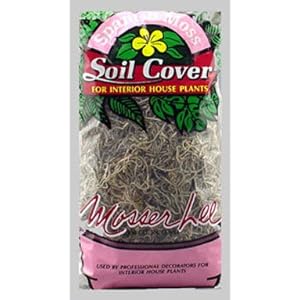
Spanish moss is pretty easy to find around here. It's at craft stores and floral shops, if you're in a retail mood--and online, naturally; today's image is from Amazon.com--or you can simply go pull it down from oak trees, free but for the labor. Fluffy, clean, and moisture-retaining, it's used as a mulch for potted plants and as a compostable rooting medium in some hydroponic systems.

Last year, I decided to see how it would do 1) as worm bedding; 2) in an ultra-low-tech vermiponics system; 3) in a traditional compost bin; 4) in post-bokashi quick composting; 5) as a carrier for microbes aka bokashi “bran”

Lost the specifics in the fire (the computer melted!), but here's what I found:

1) Worms love Spanish moss once it gets wet. They tangle themselves up in it and chow down. As bedding, sprinkled with soil and eggshell, it works as well as dried leaves, though the soil is necessary both for grit and microbes (I think; never tried a gritless wormery). Spanish moss is less prone to compaction than paper/cardboard bedding, and decomposes quickly except for a wiry residual structure. It also seems to encourage reproduction; that or fewer worms out-migrate from a unit with Spanish moss than one with other bedding materials. Or maybe both. Lots of worms of all sizes.

2) Spanish moss plus worms probably won't last through a long growing season, though it's fine for a short one. It is not wholly sufficient to nourish worms and plants without some additional food source, but both liquid (diluted bokashi juice) and solid (compost*) foods can be used with this system.

3) Spanish moss will break down in a bin, but provides no additional benefit over other dry materials so far as I can tell.

4) Spanish moss works to normalize moisture levels for quick, thorough composting, not as well as dried leaves (with their added freight of microbes) but far better than shredded phone book pages.

5) Spanish moss is not a reasonable substitute for bran, as it's too much work to resize and has a greater tendency to self-compost rather than simply fermenting.

I tried using it as a barrier against insects, but it's no help at all there; can't have everything, I suppose. Nor is it an odor-blocker. Out of curiosity, I put a thick layer of dried Spanish moss in the bottom of one planter, a few inches below root-level, and mixed a cup or so into the potting mix in another, to see if it would cause any nutrient sequestration—but then I forgot and fed those plants bokashi juice, so I can't say. (The nutrients in bokashi juice are so very bioavailable that I'm planning on testing it as a solitary nutrient source this year, with no soil or worms or anything.) I can say, however, that the moss was wholly decomposed by the time I repotted the plants, and the soil in both held water very well without bogging down.

In a spigot-alternative bucket, Spanish moss is less likely to heat up than fresh coir. It makes a really nice mid-ferment addition, too, in any bucket wet enough to have condensation on the lid. And what brought this post into being today was the mixing of equal volumes of Spanish moss and cured bokashi, that shall after a rest period be used to start this spring's first vermiponics unit. Soil-free gardening being one of my many fascinations, not entirely in anticipation of what some of my favorite bloggers have taken to calling TEOTWAWKI [The end of the world as we know it].

I'll be testing the pH of the mossy-bokashi mix before use, of course; verniponics -G- tolerances lie somewhere between soil and hydroponics, and I'd really rather not melt any worms or burn any roots. We shall see...

Dreaming of spring,

DSF


*Standard gardener's definition of compost; haven't yet tried bokashi without that additional step. This season, though...

Sunday, January 9, 2011

Project Restart: Resupply


Bought myself a new bottle of EM-1. Though it doesn't say that on the label...

Back when I started playing with bokashi, I did the math and determined that buying the liquid inoculant plus molasses and bran was much cheaper than purchasing dried EM bokashi bran. It's even cheaper if you activate the EM-1, which can be used as is, skipping the bran altogether, or used to inoculate a dry carrier if that's the preference*.

That math is still correct, but there was no way this bottle was going to be as cheap as my first. My local bokashi product retailer doesn't currently offer it, and Whole Foods no longer carries EM-1 (grr!). I didn't feel up to even the minor hassle of having it ordered through Sun Harvest or trying to talk my local feed store into shelving a case, so I went ahead and ordered it online, painful shipping charges and all.

Before the fire, I'd been planning to buy one of the line extension products, and I was nearly finished with my second round of a test for posting, so I went ahead and purchased what I'd need to pick up where I'd left off: one bottle of EM-1, a bag of EM bokashi bran from the same source as the liquid inoculant, and the item I'd been planning to buy, “EM Plus,” which is a recipe variant--same ingredients as EM-1, but with more rhodobacters.

I'm very fond of those, and have been wondering what effect extras might have in a bucket and as a cleanser. (Think trash bins.) But my garden budget is pretty much always in the negative, and I try not to let the blog-project cost me more than I save in produce costs, so I'd been putting it off, hoping I'd see it locally--shipping liquids is expensive.

That was before the fire. After, I needed to replace my EM. Immediately. While I have had some success with a few of the homebrew recipes, I'm not confident enough in any of those to give up on my brand-name EM--added to which, all the homebrew recipes take a while to make. I needed a source of EM to keep my buckets going and to use for non-bucket applications (chiefly cleaning right now), so time for a little spending.

There are two retailers on the trial list just now, but only one of them offered EM Plus. Except that they've changed the label. Mighty Microbes now sells it as SCD ProBio Balance Plus (Previously Sold as SCD EM Plus). It's not the only change; my EM-1 is ProBio Balance Original (Previously Sold as SCD EM Original), and the EM bokashi bran is All Seasons Bokashi(TM) – Compost Starter, Soil Inoculant – with SCD Probiotics Inside.

With the new packaging, you have to search to find any reference to EM! There's no "EM" at all on the bokashi packaging--which refers to “ancient Japanese farmers” but doesn't mention Dr. Higa, who is pretty much universally credited as the creator of the EM formula; there's nothing at all EM or bokashi-related on the Plus package, which focuses on probiotics; and the Original, formerly known as EM-1, has only this small reference:


SCD Probiotics Mother Culture ™ is made using the principles of effective microorganism (EM) applied science.


I wondered, but all become clear with the last line on the label:

SCD Probiotics is not affiliated with, sponsored by or endorsed by EM Research Organization, Inc. or their affiliates.


Hmm. Part of me wonders at the backstory. Part of me worries if the next step after label-changes might not be product withdrawals. (I need my EM!) Most of me, however, is just happy to have my microbes back.

At least for now.

DSF


*I typically do a bit of each, buying retail EM bokashi bran only for experimental purposes, as gifts, or to keep in my hiking kit, as I find it drying it myself not worth the hassle.

Thursday, December 23, 2010

Project Restart: Not exactly sugarplums


At some point during the post-fire chaos, the cleaners dumped my worm towers (!), so now that's all [mostly] resolved, I've been trying to rebuild my herd. Or is it a horde? Whatever, Verne (red) and Cousin Clem (blue) were scattered from their containment some time during the past month, and I want them back!

Didn't have any cured bokashi--the cleaners again--but dried leaves a-plenty had fallen, so I filled a planter with those and poured in a bit of molasses water. Which is just what it sounds like, a teaspoon of blackstrap in a quart of tap. And having observed Verne's preferences for a while now -G-, I stuck that planter where the worm towers had been, with another planter full of rescued soil on top to hold in moisture and keep out possums and coons.

When I checked a few days later, there were worms in the planter. Not as many as had populated the towers, but enough to start again even if I hadn't had other colonies on other sites. My worm-ID'ing skills aren't all that well honed, and I did not take this chance to practice, so no real idea whether Verne or Clem showed up to the party first. Thinnish, reddish, photophobic and where I can reach him--whichever he is, I'm glad to see him.

I'll be plantering the usual mix of dried leaves and cured bokashi as soon as I have some bokashi cured, and maybe a few other tests--diluted kombucha with and without molasses; EM-1 ditto; maybe some soaked EM bokashi bran--but I think all those extra microbes might be necessary only where the carbon source isn't already so rich in diversity as fall sweepings. [Someone remind me to grab a bag of shredded paper from work!] But for now, I have a "recipe" that works for me, and it's a whole lot less labor than the apricot shortbread my family makes for Christmas.

Or gingerbread. Though if you were making that, you'd have the molasses right there...

Happy worming, and happy holidays,

DSF


[image from International Molasses.com.]

Sunday, December 12, 2010

Fail a bucket in ten easy steps


Now and then, I put together a starter kit for folks interested in trying bokashi; nothing elaborate, just a nested-bucket set with spigot, a bag of EM bokashi bran, a potato masher, and really simple instructions. (Usually one of my Tidy Cat bucket-sets, as I think the press-to-seal lids are a decent compromise between ease and security, but really, it's whatever I have on hand.)

I try not to ask after those buckets too often, but when my friend in the multi-generation-household offered to return their buckets to me, I had to know! Turns out one of the older members of the family found a new way to fail a bucket.

#11 Hide the thing! Immediately after adding a large quantity of fresh waste, including “heavy” items (meats, dairies, oils) but before the addition of any bokashi bran. And hide it so well that the reservoir cannot be tapped, so the less-than-optimal leachate backs up into the fermentation chamber.

In a word, blecch.

Suppose I ought to provide a few numbers to go with that one, yeah? Let's see...

#1. Skipping the drain.

Commercial bokashi buckets have a false floor, mesh sieve, or grate above a reservoir--but when folks decide to try DIY, too many decide not to bother with that bit. Yes, it is possible to ferment dryish kitchen waste without a reservoir, but it's not as simple as all that.

#2. Inadequate seal.

The microbes in EM bokashi, and in most of the homebrew/silo bucket models, are selected to work in the absence of fresh air. By contrast, the random microbes already present in and on food wastes do just fine in an oxygen-rich environment. Bokashi works on a dominance principle--the microbes we want need to out-grow the others, so we need to provide them the right conditions for that. Lids matter! As does the fit between your nested buckets, if you're using them, and the spigot. Not to mention, an improperly seated spigot will lead to bokashi juice escaping, a scenario to be avoided at all costs.

#3. Not enough bran.

I haven't heard of anyone completely forgetting bran in a bucket, but many neglect to add it at least daily, or with every inch* of food waste added, or the extra “scoop for luck” I think is advisable with heavy or strongly odorous items. My rule of thumb: if it smells bad, add more bran! And see #5 below.

#4. Forgetting to tap.

As with the reservoir issue above, this is one of those steps people don't always understand is required, or believe is as frequently necessary as it can be, until it's too late. As in, when their neighbors are complaining about the stench. Bokashi juice, or whatever you care to call bucket leachate, should never be allowed to back up into the fermentation chamber, and really ought to be drained twice a week or so regardless of volume (though, depending on your bucket contents, you might have almost none, or have one so rich with microbes it will keep fermenting until your bucket is ready for the next stage, with no ill effects from sitting. It's just...how do you tell, and do you want to risk it? Simpler to drain!)

#5. Unmashed bucket-stuffs.

I include a potato masher with my bokashi starter kits. It's not that they work any better than some other tool, but they're easy to acquire, cheap, and washable. Mashing serves three purposes: it excludes air, expresses excess moisture, and increases contact between the inoculant (bran or liquid) and the foodstuffs.

My local bokashi retailer, on the other hand, recommends stirring the top layer of food wastes to ensure appropriate contact between the microbial inoculant and foodstuffs, so I assume their kits include some sort of spoon. Not sure where they stand on moisture and pressure, but I do know there have been some issues with folks mashing their foodstuffs a bit too hard, and damaging the grates... Well, let's call this “unmixed” for them.

The next few ways to fail could, I suppose, all be lumped into one point: adding things you're not supposed to. But I thought they each deserved their own numbers. There aren't too many things you can't add to your bokashi bucket, but once you've gotten used to diverting all your kitchen waste to one spot, it can be hard to remember what doesn't go there! Generally, however, quick ways to fail your bucket will include:

#6. Adding synthetics/chemicals.

No synthetics ever belong in the bokashi bucket. No plastic**, no styrofoam, no silicone, no odd chemicals. And if you've used a paper towel to mop up the cleaning compound from your stove, that paper towel is now ineligible for the bokashi. (The usual retailer recommendation is to not put any paper in the bucket, but in small pieces it won't hurt, it just takes up space so your buckets fill up faster. Don't add it if that's a concern so long as you have some other landfill-diversion tactic for the stuff.)


#7. Drowning the bokashi: adding liquids

Our major microbial triad and all its fellows have a preferred habitat, and it's not in a bucket at 100% humidity! (Can't blame the things. -G-) Pour liquids down the drain or dilute and add to a compost pile, or dilute still further and use to water plants, depending on what those liquids might be, but as a rule, if it's pourable it's not for bokashi-ing.

Of course, if you have a stew or some split pea soup past edibility, those are close enough to solid that they're getting bucketed, no question. Add extra of whatever microbial inoculant you're using, mash or mix is up well, and tap the reservoir an extra time or two. But the leftover turkey broth? That gets fed to your drain if you have no better options.

#8. The opposing faction: molds/spoiled materials.

A really healthy bucket can overcome a small quantity of mold, but not much. If it's slimy or turning colors--any colors other than simple aging-past-edibility yellow or exposed-to-air brown--it's not for the bokashi bucket.

#9. Bugs!

If you're tossing that bag of fruit because it's got fruitflies, it does NOT go in your bokashi bucket. The things will spawn in there, and it's nasty. Uber-recyclers might freeze the material first, to kill the bugs, and then ferment it; I'm likely to toss it into the bamboo thicket for nature's clean-up crew, or into the apartment's outdoor compost bin, with several inches of dried leaves for topping.

#10. Abandoning the bucket.

Bokashi is relatively stable, but not eternally pickled. At some point, it does have to be extracted from the bucket, or items must be added to it, or it will rot. And you don't want to know what that's like. Really. Don't believe me? Ask Bentley.

And a bonus, unnumbered because it's not really under your control:

#X. Bad bran/inoculant.

These things happen. The EM-1 might have frozen during storage or shipping; the bran might have been contaminated; the bags, bottles, or boxes in which your preferred retail packages things might have picked up some microbes transferred from an inadequately cleaned container formerly used to transport garbage. Who knows?

EM bokashi bran should smell like one or more of its source materials and near relatives: Bran, molasses, yeast, vinegar. A hint of alcohol is possible, particularly in liquid inoculant, not ideal but okay. Any EM product should look like its source materials, too--liquid EM is brown, typically darker than cider vinegar but lighter than molasses; EM bokashi bran is visibly identifiable as bran or a mixture of bran and hulls or whatever, and either dry or damp-looking, in which latter case it may have some white acetobacter growth. If your bran is any other color, it should not be used! Blue, red, green, and black are not acceptable.

So, okay, the post-title's a bit misleading. I don't suppose you'd need to work your way through all ten-plus to fail a bucket--but I'd love to see--from a distance—the results if someone were to try!


For the rest of us, let's call this ten-plus things to avoid lest our buckets fail.

Happy bucketing,

DSF


[image from my files, sorry, no credit noted. If you know, please tell me!]

Monday, October 4, 2010

What makes a good bokashi bran?


Some posts just fall through the cracks—I don't have a good image, there's something else I'd rather do, I'm missing a bit of information I'd like to include, whatever. But just sent me a message reminding me that there's a whole small set of posts I've neglected to publish!

Oops.

I'd intended to put up a few reviews of various retail EM bokashi brans. Still mean to, I guess, though I'm not currently within reach of those files. Haven't tried all the available options yet, but the handful I've been through have been different enough to make comparisons worthwhile.

Beginning with the cost. The fact that EM bokashi costs anything is a not inconsiderable barrier to adoption. Expensive designer buckets and how-much-plus-shipping? bags of magic dust don't always seem like a reasonable alternative to current practice. So cheaper-per-unit bags get my vote over more expensive ones, of which there are a surprising number.

So do local products, assuming there's no or only very little difference in total price. (I'll pay a bit extra for the instant gratification factor, but not very much.) Not being vigilant enough to police manufacturers for sustainable practices, I'll skip the whole carbon-footprint bit for now.

As yet, I haven't chosen not to buy an inoculated bran because of its base, but I wouldn't elect to buy one with sawdust in its ingredients. Personal preference. I'm a gardener and just don't want to see sawdust clinging to my sweet potatoes at harvest. Bran composts quickly.

Speaking of preference, I'm much more inclined to purchase from a retailer who lists the ingredients—including the specific microbes in the culture together with that culture's source.

Assuming all other variables were equal, I'd buy the one packaged in a compostable container. The pictured rice-bran ones comes in a corn plastic shell that will decompose in the bokashi bucket! But, again, that's not too high on my list.

So what's up at the top, just beneath the all-important cost?

1. Moisture: Packaged bokashi bran is described as dry and shelf-stable, but it isn't always nor equally so. If I'm springing for the pre-made stuff, I want it dry! Dry enough to store some in my hiking kit, or to keep in a starter-bucket in my car for a week or two. Dry enough that it won't grow acetobacters in the bag to startle the poor unsuspecting victims new bucketers to whom I'm delivering those welcome-to-bokashi gifts. And, it goes without saying, dry enough that it won't spoil before I get a chance to use it.

2. Scent: Bokashi bran from Hawaii doesn't smell the same as bokashi bran from Texas, even if the ingredient lists are identical. Nor does bokashi from every retailer in a region smell the same. I found one retail bran unacceptably acrid, though it worked perfectly well and the less-vinegary character might make it a better choice for some. As well, there's a difference in scent between wheat bran and rice bran, though I don't much care which is used. Not sure how to quantify that, but it's worth mentioning, if only so other people know the variance exists.

3. Speed to success: Fresh bokashi bran starts to work faster than dried, but that's a matter of hours, not days. Bokashi that's been improperly stored (frozen or exposed to air, I guess) takes much longer to work, and may require more inoculant as well. The retail bran that I wasn't sure was working until the second day isn't one I'll be buying again even though it did successfully ferment a bucket. Quick evidence of success seems like a good thing--though not at the expense of shelf-life. Of course, lasting evidence of success is kind of necessary, too; I rate all the EM items on how well they can handle small volumes of things the retailers tell you not to add; how long it takes the deodorizing microbes to conquer strong aromas; etc.

4. Directions: now and then I'll buy a bag of bran for someone else, not always for a bokashi bucket. Folks with cats willing to use compostable litters can mix EM bokashi bran into the box, and it's useful in the dog-yard as well. I don't insist that the packaging say that, but it really should say something about use, considering how unfamiliar most people are with the product. EM bokashi bran is not a term that can stand without definition, not yet. Ideally, the package lists how much kitchen waste it can be used to process, in gallons. And the fact that something has to be done to that processed/pickled waste afterward.

5. Add-ins: I haven't decided how I feel about these. Some of the EM bokashi retailers have extended their brands, so they have different brans for different situations. Minerals in which a region is known to be deficient; seaweed for agricultural use; etc. At the moment, I don't buy them, so can't rate them, but they, too, belong on the list of criteria to consider. For later, since I don't seem to be ending this project any time soon. -G- At some point, I'll probably try the EM mix with extra rhodobacters. I would not buy a bokashi bran with added salt (not even sea salt), refined sugar, synthetics or animal products--but I haven't yet seen any of those anyway.

My perfect packaged EM bokashi bran? Made locally, and widely available on store shelves as well as online; comes packaged dry in a waterproof compostable container; contains only EM-1 (or the extra-rhodobacters one), with molasses, rain-, spring- or well-water, bran, and maybe a responsibly sourced mineral or two; costs no more than $5/bucket-worth in today's dollars; has clear instructions including the fact that bokashi is not a complete composting solution!

This isn't a tall order. Several of the various retailer products I've tried have come close. They all fail on that disclaimer; only two have been really dry so far (plus one retailer where the first bag was dry but the second wasn't); and few are as forthcoming about ingredients as I would like, though the retailers are generally pretty willing to answer questions.

It's still a relatively new industry, so I figure one of these days someone'll score perfectly. At which point, I may reconsider my usual practice of making my own EM and IMO bokashi brans, though probably not. But I will certainly celebrate by buying a few bags to keep on hand!

DSF

Thursday, September 23, 2010

Beyond Molasses


image from The Nourished Kitchen. The Internet is an amazing place...

Molasses is used as a “carbohydrate booster” in hydroponics, and dry molasses is sold as a “nutrient-rich soil booster” at one of my local feed stores*. It's more desirable than simple sugars for use in gardening because of its relatively high concentration of minerals, and particularly because of its mineral-chelation effect—skipping the science, that means molasses can provide micronutrients to plants with no danger of toxic overload of those nutrients, and dramatically improve plants' ability to use other nutrients already present, thus lowering the need for fertilizers.

Yikes. I've been spending too much time around eggheads lately. -G- Where was I? Molasses, alternatives to, right.

Don't get me wrong, I love molasses. In the kitchen and the garden both (ginger snaps and AEM/AIM come immediately to mind). But judging by the number of plaintive queries I've seen, non-US gardeners, especially, may not be able to find molasses. And, too, I'm fundamentally opposed to buying anything when I have something already that will do as well, so...I started playing.

Refined sugar? No!

When growing microbes, refined sugar promotes different populations than the more complex molasses; seeing as EM was designed around molasses, I wanted something similar.

Honey? Nope.

Honey, if not contaminated, will not spoil. Anti-biotic, anti-microbial, not at all what EM needs.

Maple syrup? Way too expensive to use for this, so I didn't even try.

Stevia? Aspartame? Xylitol? No, no, no.

Stevia is a sweetener, but not a sugar. Artificial whatevers I'll leave in the lab, not my garden. Xylitol, and sugar alcohols generally, seem to be harder for microbes to process than the ultra-refined simple sugars, but not complex enough to sustain sufficient microbe-generations for my needs. (Nor for kombucha, according to a site I cannot now find to link. Ah, well.)

Molasses is a waste product derived, generally, from processing sugar cane. The cane is harvested and stripped of leaves, then pressed/smashed for juice. That juice is boiled and processed to extract sugars; molasses is what's left over after the sugar production. Different grades and categories of molasses indicate the processing methods undergone. Blackstrap molasses, which is what I use, has the best nutritional profile for humans and animals; my microbes and plants seem to like it, too.

Jaggery? Palm sugar? Piloncillo? Yes.

Jaggery, as I know the term, can mean the solid sugar cane remnants after the crushing, or a sugar made by evaporating the juice of date palm sap, or any unrefined, largely unprocessed sugar. Piloncillo is more a reference to the cone-shape than the make-up, which is simply unrefined sugar, typically made of evaporated cane juice. So, yeah, any of the above makes a decent substitute for molasses in AIM. Their nutritional profiles may not be the same, but they're all complex enough to grow vigorous effective-microbe colonies. Still too early to see how well it compares to blackstrap molasses in the garden, but so far, no difference has been observed.

Sorghum molasses?

I find it hard to imagine an area that has sorghum molasses but no blackstrap. Perhaps a household, though, so I looked it up. Turns out, this is more properly labeled a “syrup,” lower nutrient concentrations than real molasses, perhaps not quite so refined as table sugar. I wouldn't use it in my AIM, but I'd be curious as to other folks' results.

And a bonus item:

Dried molasses? Sadly, not for AEM/AIM. Turns out, the stuff at the feed store is actually molasses sprayed on “grain waste.” So, maybe for EM/IMO bokashi bran!

Until the next ferment,

DSF


*Yes, Austin really is in Texas. Sometimes that's hard to remember. Then you realize that you live within easy riding distance of three different feed stores, two of which are chains.

Monday, July 19, 2010

Don’t Try This At Home


—no, wait, I’m not your mother! Do whatever you like. But this may present a slight hazard in some situations…

Some little while ago, I tried a reclaimed bit of peat-based potting mix as an absorbent material in the bottom of a mini bokashi bucket, yet another version of the no-drain model some folks seem to prefer. Worked very well with drier materials, though it was pretty easy to overwhelm and correcting moisture levels isn’t nearly as simple without a drain. But the bokashi it produced was a dense, spongy mass held together with thick mats of mycelia, and it broke down into a usable potting medium remarkably quickly, so I had to try it again. Full-sized bucket this time, with three inches of new coir in place of the soil-less mix I didn’t have. (The stuff that comes in bricks for worm bedding, not the long-fibered kind from which planter baskets are made.)

At first, I thought it was my imagination, but it wasn’t: the coir plus EM bokashi bran plus a pot’s fresh UCG started a thermophilic composting reaction in my kitchen bucket. That first heating passed, presumably through lack of oxygen, but it restarted with each new addition of food (and air). Without a recording thermometer, I can’t be certain, but I’d guess it never went above 160 and didn’t sustain that much heat for more than a couple of hours at a time. Not much visible breaking down, but signs of fermentation are present, so I guess the heat isn’t hurting anything. And it’s even a food-grade bucket this time, so I won’t worry too much about plastic off-gassing or melting. It’s not like I store my working buckets on top of oily rags or anything. Still…

After all the years I tried hot-composting in spaces too small for the ideal three-bin set-up, with barely enough success to keep me from giving up entirely, it’s a tad bit unnerving to have things heating where I don’t really want them to.

On the other hand, this might actually be an all-in-one indoor compost--with no draining, no bugs, no worms, no off-odors, and no need to empty anything until it’s done. What’s a little fire risk compared to that?

...she asks, suddenly hoping the landfolks aren’t reading this. -G-


DSF

[no image credit, because I've lost the link. Sigh. File says "international pictogram no flame-bucket]


UPDATE:

Harvested that bucket a bit after posting this. Next time, if there is a next time, I'll have to add a thick coir layer at about the halfway point, since the material in the middle of this bucket was too wet and trending toward failure, though not quite there. But the stuff at the top was bokashi leaning toward self-composting, and the stuff at the bottom was compost with a slightly higher than normal pH. I layered it with dried leaves, giggling at the speed of heating, and then...well, this is me. I forgot to turn it! But Verne neared warp-speed in his haste to move in, and it's largely degraded past identifying contents already.

Thursday, May 27, 2010

Tales from the Bucket: The Full Circle Bucket


Having figured out how to compost, vermicompost, and soil-finish bokashi appropriately for my setting, why am I still playing around with different techniques? Well, I’m curious, but more than that—this may not always be my setting! And there’s never a guarantee any living-space will conform to retailers expectations. So I’m trying to find methods that will work for other non-standard situations.

This particular bucket test is an unqualified success, but I wouldn’t use it unless my situation required it: by my current standards, it's slow. Three to six months depending on materials and conditions, much slower than my preferred techniques. On the positive side, it’s contained enough that it could be done in a garage as well as the balcony I’ve envisioned, or even indoors given some care with material selection.

What is it? A hybrid composting/finishing done in the bokashi bucket. I have, from time to time, a (temporary!) sufficiency of buckets, and in one of my more squeamish moments, decided to dump some dried leaves into a curing bucket instead of decanting the ferment. Turns out, that wasn’t such a bad idea, though not a complete technique—the bokashi fermentation can take over the leaves, which is great if you wanted acidified leaf matter but doesn’t turn the mixed garbage pickle into any sort of soil analogue.

Poking holes into the pickle-mass and tipping in a bit of finished vermicompost improves the chances of harvesting humus. So does mixing the leaves with the bokashi—in which case, you can probably save the vermicompost for something else. Putting a weight on top of that mixed leaf-and-bokashi makes success almost inevitable, and if you use soil as all or part of that weight, the end result is a familiar, no-explanations-needed bucket of potting medium. The reservoir does need to be emptied a few times early on in the process, after which the tap can remain open and the bucket ignored awhile. Stirring will speed time to completion, but so long as sufficient microbes were added, it’s not actually necessary.

Can’t speak to minimums here; my tests have used one part compost or living soil to four parts bokashi and four parts dried leaves/shredded paper.

What if you don’t have dried leaves? Use some other dry material and a microbe source. I’ve been using shredded phone book pages for the second-stage tests, since they degrade faster than newspaper (and besides, what else do you do with them?), and the same one-to-one ratio seems to work, though the end product is a little heavier. For microbes, use finished compost, vermicompost, or good garden soil.

And if you have unfinished vermicompost that still has worms in it, you can add that about a week after the leaves and bokashi get mixed together, which will greatly speed the time to completion, and get you a healthy new crop of worms as well, so long as the bucket’s kept out of direct sunlight and there’s some actual soil in there—preferably an inch-thick layer on top, above and beyond whatever may be in the vermicompost.

I can’t imagine many people having enough bokashi buckets to make this their primary post-ferment technique, but the closed-container process may be helpful for some settings. Like, say, folks who have no outdoor space!

Theoretically (which is to say, I haven't tried this), you could design your SIP in such fashion as to do the ferment, curing, finishing, and planting all in the same container, just by mixing in various items (EM bokashi bran, then leaves and perhaps soil, then a bunch of coir). All in the same bucket. Grow food crops, and after harvest...

Yeah, okay, you get it. Excuse me, I must have some gardening to do!

DSF

Saturday, January 23, 2010

Tomorrow's News?


Interesting tidbit in my e-mail the other day, from our local bokashi retailer(!). Microbial Earth sends out periodic newsletters, not yet archived on the web site though I'm sure they shall be; for now, I hope no one will object if I just quote the relevant bit.

As this is, really, relevant to my situation and something I should very much like to try. Except that I kind of can't. The household feline has definite preferences in litter: sand, preferably raked in swirls.

Okay, so I'm not sure about that last part, but clean sand is completely irresistible to her, and plant-based litters utterly unacceptable. When she first came to me, we went through several different litters before finding one she found at all tolerable, and it took still longer to determine which sort she would use in preference to the area's informal bike paths where the grass is worn away. Small-grained clumpable litter is all that receives her, so to speak, her seal of approval, and the sharper the better.

Not the crystal litter. Not the attractively compostable corn-based stuff, not the newspaper litter that can be purchased or made at home. And not wheat bran. Nor even a mixture of sandy bits and something else. But for those felines who will use a bran litter:


One of the fascinating developments we have discovered at the farmer's markets is the use of the effective microbes in kitty litter. Since October, Microbial Earth clients have been using the solid form of the microbes (bokashi translates as fermented bran in Japanese) by applying 2 cups of bokashi to their cat litter boxes. This means that you don't have to buy new litter as frequently, and have less work every year due to the reduced number of changes, as well as expense.

EVEN BETTER!

Use 100% bokashi for your kitty litter and you can compost all of it in your yard, just like the bokashi food wastes.

Bokashi can be used in a litter box instead of other litters for cats to control odors from urine and feces. The most common litter on the market is made of clay and is almost always thrown in a landfill. Instead of landfilling, put the litter to good use as a fertilizer for your ornamental plants, trees and flower beds. Talk about a great way to recycle and save money!


Hmm. A bit more than a year ago, there was a kid who managed a worm-based kitty waste disposal set-up. I wonder how hard it'd be to convert a couple of those silly sieve-and-tray litter boxes into a wormery? But of course, someone else is going to have to do this one. I may be slightly obsessed with bokashi, but there's no way I'm borrowing a cat!

The household feline would not permit it.

Still...

DSF

{image from wheatmontana.com, a site I tripped over while searching for average bulk wheat bran prices}

Thursday, September 17, 2009

A Year of Bokashi


It’s been a year, or a bit more, since that first bucket. Am I glad I decided to try bokashi? Absolutely. Shall I continue into the second year? You bet, and quite probably beyond. Am I satisfied it’s the answer to my particular needs?

Well...yes and no.

I love bokashi for its ease of use, for its capacity to handle things I never thought of as compostable before, for its versatility, and most of all for its speed to completion—without recourse to machines or manual chopping, I can have usable planting media, composts, and fertilizers in less than a month, or invest a bit more time though no more effort to create incredibly lush microbe-rich vermicompost and compost-amended potting mixes.

But it’s still not perfect. For me, I mean. Bokashi can’t be used straight out of the bucket, it has to be composted or otherwise finished first. And have I mentioned that I’m lazy?

The apartment now has a full-sized compost bin—installed very shortly after I started this project, in fact—and while that approximately 30 gallon unit is not sufficient to handle all the yard and kitchen waste the tenants generate, I probably wouldn’t have bothered with bokashi bucket fermentation had it been around before. For all that bokashi is far preferable (more convienient, more controllable, requiring far less carbon-rich matter or other resources, and processing many more items than traditional aerobic compost), the apartment bin has one unanswerable advantage: it’s free.

The compost bin is outdoors and out of the way, and can be neglected without concern for odor, also pluses to my point of view. And it’s somehow less personal than bokashi. Easier to share.

Okay, so I’m strange, but I’ve discovered that I’m not really comfortable with the idea of my neighbors knowing, in intimate detail, just what it is I discard. Trash bags are sealed, so fairly private even when sharing wheelie bins. But the contents of a bokashi bucket are largely unchanged in appearance after fermentation—so anyone who cares to look down, when adding their own ferment to a communal post-bucket container, can see exactly what I’ve fermented. (To the extent it isn’t covered or diced into anonymity, at least.) Creeps me out. Nor do I want to know what the neighbors dispose of. Somehow, the compost bin’s more limited contents seem less...telling.

(Don’t ask about the recycling wheelie. I try not to think about it, or to look when adding my own recyclables. It’s none of my business, thanks just the same.)

So even if I could figure out how to keep Black Soldier Flies out of a converted wheelie bin, I wouldn’t be all that comfortable with an apartment Great Big Bokashi Bin [which is in the archives somewhere]. Maybe something in a compactor? Hmm...

No, sorry, this post was about last year, not future projects. So where was I? Oh, yes: the ROI of bokashi.

Over this past year I generated more compost and refreshed more planter mixes than I’d really thought possible, not to mention sowed and reaped a great deal of produce for very little money and not all that much work. Far more than I managed when I last had an in-ground garden and associated traditional aerobic compost bin, even given the disadvantages of growing produce in planters and our drought.

Not to mention EM’s other uses, in the garden and beyond. So, yes, lots of benefits, and well worth the minimal expense (a dollar a week or less, if I’m considering only bokashi and not the varied and sundry tangential experiments) and minimal effort of draining the bucket every couple of days, emptying a bucket every couple of weeks, mixing a quart of AEM now and then, and making EM bokashi bran (or “bran”).

But there’s that one great big issue still to resolve: What happens after the bucket. I spent a fair amount of time, this past year, in reading about, thinking about, and testing other people’s solutions and my own adjustments to same. And I found a few solutions that do work for me—and, presumably, for others in similar situations. That is, for those of us so land-deprived we haven’t even a hole in the ground. But for all I have options, I’m still looking for The One.

My perfect post-bucket solution would be 1) Indoors. 2) In the same bokashi bucket. 3) Fast. 4) As nearly hands-free as can be. 5) Free, or at least very cheap.

Vermicomposting can be done indoors, but the standard model isn’t feasible for me, given my small living space and the way I feel about wriggly things; I’ll probably try another escape-proof unit this winter, maybe an indoor planter tower or something, but for now, the worms are outdoor-only. Planter finishing can be done indoors (though I’d advise a garage instead of a kitchen, especially if you’re cutting your curing time short) but it takes a fair bit of space, effort, and other resources. Next?

I’ve been playing with bokashi fermentation in disposable containers [upcoming post, and I’ll try to get it up this week; with fermentation and composting in the same reusable bucket; with adding composting worms to a bokashi bucket after a pre-composting stage; etc. But while I’ve had some successes, I’m not altogether thrilled with any of these.

Speed, bokashi has down. Add cured bokashi to what trad-composters call a brown material and stand back! A bucket of dried leaves plus one of bokashi becomes compost very quickly, faster with a bit of turning, but if you prefer the hands-off model, mixing in some dirt and adding a soil blanket—using good garden soil—is almost as fast as the recommended burial that isn’t an option for the groundless apartment gardener that I am. Outdoors, at least. That good garden soil has too many wriggly or crawling things for me to want it inside, you see, as do swept-up leaves.

If I had the space and the funds, a compost tumbler/turner would be my next garden purchase. Imagine how quickly, how completely, that mix would convert! But that’s hardly an indoor solution. So I’m still thinking, still reading, still testing.

At least it keeps me from being bored. And the garden’s growing.

DSF

Friday, August 21, 2009

Can you smell that?


It’s time, I think, to talk about not sailing ships and sealing wax but scents. Aromas, smells, stenches, whatever. Time to talk about odor.

The bokashi retailers persist in saying that bokashi doesn’t smell. What they mean is that it doesn’t stink, and/or that odor does not escape the container. Dried EM bokashi bran has a very faint odor, not at all unpleasant unless you find vinegar, molasses, and bran disagreeable. Fresh, it smells like uncooked bran muffins with a hint of kombucha or cider vinegar. Again, not unpleasant unless you’re one of those people who don’t like the smell of vinegar. Other carriers will have different smells, but dried, they’re all discreet enough, and fresh, the smell can be a bit strange, but generally clean and non-clinging, nothing to bother anyone.

A healthy bokashi bucket smells more strongly of vinegar, often with undertones of the foods in the bucket--that scent is not perceptible outside the bucket, assuming the bucket is airtight and drained often, and it should not be overpowering when the bucket is open if you’ve drained the reservoir frequently and refrained from adding spoiled (slimy, moldy) foods to the mix.

If you’re adding something strongly scented, like smoked meats or shellfish, expect to smell that each time you open the bucket for the next three or four days. If that’s a real problem, you can ferment that item separately, or store any newly generated compostables for a couple of days to let the bucket fermentation progress. Adding much more EM bokashi bran than the retailers recommend helps, too; I often completely cover odorous additions with bran.

Bokashi juice, that microbe-rich leachate, smells like vinegar, but not at all the sort you’d be willing to put on a salad. The character depends on what you’ve put in the bucket and how long ago, as well as how long ago you last drained the reservoir; I aim for twice a week (though I don’t often manage it), as I find that at that interval the scent is more cider vinegar and less old-gym-sock pickle. Diluted as recommended, the scent is not perceptible even when using in an enclosed space, but every care should be taken to avoid spilling the full-strength juice.

An undrained bucket smells like a dumpster after a week in the Texas summer sun. Adding absorbent materials to the bottom of a bucket may help in the short-term, but once the bottom’s too wet for EM, the bucket will quickly begin to stink.

Cured bokashi smells fermented. There should be no competing scent once the bucket is finished. Turning out a cured bucket for finishing is best done outside, or at least in a well-ventilated space, as the odor does linger awhile. The soil-based finishing methods suppress odor quite well so long as they aren’t too wet, and an enclosed composter will largely contain smells; other methods may allow some odor to escape, so are best done outdoors and away from doors and windows.

Like bokashi retailers, composter retailers persist in saying that compost doesn’t smell. Like the bokashi retailers, what they mean is that, properly done, it doesn’t stink. Or, depending on the containment unit, that no smell escapes. Ditto the vermicomposter retailers. None of them are scentless. To me, a healthy wormery smells like a forest in autumn after rain, not at all an unpleasant scent, but a bucket wormery too small to handle all my household-generated organics (barring those not eligible for standard-practice residential vermicomposting) made my whole small apartment smell like that damp forest. Thanks, but no. An enclosed wormery, like an airtight bucket, emits no odor save when open, so were the opening done in a well-ventilated area, that would be a possibility, but keeping a standard-model in my kitchen is not something I’d be willing to try again.

Compost or vermicompost in progress smells like its components. Around here, that’s usually dried leaves and cured bokashi. Not unpleasant, but not something you’d wear for perfume or use for an indoor air freshener. Covers or enclosures keep that odor from becoming a problem, though if you were to get right next to a unit and breathe deeply, you might be able to perceive it. And in an unventilated space, it would eventually become strong enough to notice. Of course, aerobic composting and vermicomposting both work better with proper ventilation anyway. Wormeries especially need airflow lest they go anaerobic, in which case they stop smelling like loam-and-leaves and start to stink like unemptied trash cans.

Finished bokashi compost smells like compost. There is no food or vinegar odor still present. The same for vermicompost. Bokashi used as sub-surface fertilizer will be quickly used except for the more durable materials (bone, eggshell, etc.), and have no individual scent by the end of a growing season.

(A)EM smells like molasses and vinegar, sweeter or sharper depending on its pH or age. Sprayed full-strength or in strong dilution onto surfaces, the smell remains perceptible for some time after drying. Which can make for an odd mix with other household cleansers!

Failed bokashi smells like unemptied garbage. Drowned compost often the same, or like backed-up sewers. [Yecch!] Dead vermicompost, too, is an assault to the nose, often including some element of eau du corpse. In other words, failure stinks!

---But no one needs me to tell them that.


DSF

Wednesday, August 19, 2009

Tales from the Bucket: Dark-Roast EM


I’ve been playing with used coffee grounds (UCG) in place of bran. Not the stuff I generate--I do drink a fair amount of coffee, but not that much, I don’t think--but coffeehouses hand the stuff out if you ask, and I frequent any number of the joints.

The last batch of caffeinated EM bokashi bran I made was, by my standards, very large: 40 cups of UCG, plus AEM and molasses and a pint or so of water. As UCG is damp-to-wet upon receipt, you need less water than in the basic recipe; other than that, and fishing out any filters (or teabags, depending on the coffeehouse), no changes need be made to the fermentation. This does require very fresh UCG, however; undesirable microbes will spoil the grounds in short order.

Takes about the same length of time to ferment UCG as wheat bran, completion judged by presence of mycelia, scent, and pH. It's tempting to dry some for use as a mulch--it looks right!--but that test shall wait until early spring, when heating the soil layer might not be altogether a bad thing. As with any EM source, it encourages hot-composting reactions when added to high-carbon (brown) materials. In contact with the scattered leaves atop my soil, and bits of same mixed in, I imagine it might burn roots in more than one sense, and my plants are already hot enough, thanks.

In a bucket, the EM+UCG encourages fermentation. Just like the bran-based stuff. I’m generous with my microbes, but no more generous with coffee-based than otherwise, and it works just as well in most situations, better in some (though not, I imagine, in a litter box or cage!).

As for the smell, any undried EM bokashi bran has a characteristic aroma. The coffee’s is stronger than the wheat bran’s, but my bokashi buckets have fair quantities of coffee grounds in them regardless, so there’s no real difference after the initial bucket-seeding. And if the smell of used coffee grounds were going to bother me, it likely would have long before now.

The only place I run into problems with UCG-based EM bokashi bran is while drying--solar drying seems so practical here in Austin, but Repulsive’s adult offspring are drawn to the scent of EM anyway, and they adore UCG, and have been known to penetrate my solar dryer to reach the stuff. Yecch! Some folks use their cars as enclosed solar dryers, but I have the same problem with that as I do with oven drying: I’m averse to filling my kitchen with odd odors, so oven-drying sweet-pickled coffee’s just not happening.

Oven-drying wheat-bran-based EM bokashi bran I’ve done, and it smells more like bran muffins than otherwise, so I can handle that. (Fairly strong undertone of kombucha during the first minutes, but not intolerable when the weather allows for open windows.) For the most part, I make my EM bokashi bran in small enough batches to use fresh, which is one less step and takes far less space, but that may not be practical for all people in all situations. In this case, I walked into a Starbucks and, on seeing their Grounds for the Garden basket empty, asked if they had any UCG. They gave me more than a bucket’s worth, double-bagged and so heavy I wished it had wheels. So I figured I might as well make a large batch. For one particular use, it wouldn’t matter if Repulsive got into it while drying--

But that’s another post, I think.

UCG as a carrier may not be the single greenest or most frugal choice, depending on your situation (transportation miles, unknown source of mixed beans, the temptation to wallet and waistline engendered by entering a coffeeshop in the first place...) But while wheat bran is cheap, free is often better, and UCG is a waste item anyway, having already served its purpose. So I thought it was worth trying.

Anyone know if songbirds are sensitive to caffeine? I know they can get drunk, at which point they fly into windows and lampposts and things. Do I have to make decaf coffee bran?

DSF

-G-

Thursday, February 26, 2009

How much time does it take to do bokashi?


When people ask me how long it takes to bokashi, I tend to assume they mean the time from kitchen waste to compost, but that’s a gardener’s query; the non-gardening green citizen might well be more interested in how much time it takes per day. How much time it takes to ferment instead of tossing the kitchen waste.

In my case, these days, practically none. Some number that, while larger than zero, is more properly reported in seconds-per-day than hours.

Really.

To begin with, I don’t chop up my kitchen trash (unless I’m feeding it to Verne). The bokashi bucket gets whatever bits and ends I happen to have, and if that’s eight-inch long pieces of pineapple rind, so be it. While I probably would chop up large pieces of meat, the situation hasn’t come up.

Then there’s the fact that I keep my bokashi bucket next to the trash and recycling containers in my kitchen; there’s no difference in time or effort to toss something into one versus another. Given a sufficiently healthy ferment, the odd tea bag or fruit rind needn’t be followed by another dose of EM; if I’ve only got a small bit of whatever, I just toss it into the bin.

When I add large volumes of organic matter, or any meat or dairy, I add a scoop of EM bokashi bran and use the masher--call it a minute total, once a day or every other day depending on how much cooking I’m doing, plus one utensil to wash*. And twice a week at least, I drain the active bucket, which might take as much as another minute and results in a cup to clean only when I don’t drain directly into the sink. Call it ten minutes a week for the active bucket. About as much time as I’d spend hauling multiple trash bags out of the apartment to the outdoor trash bins, back when I had multiple trash bags in a given week.


The curing buckets get drained when I think about it, but ought to be tapped at least twice a week. In the retailers’ usual model, there are two buckets, one curing while the other fills; in that scenario, a bucket must be emptied and cleaned twice a month. And how long that takes depends on what you’re doing with your cured bokashi.

The quickest option is to toss it into your compost bin. How long does it take to upend a bucket and scrape down the sides? Probably less than it would to locate a stopwatch, so let’s just go with “minimal.” Of course, that assumes you have a compost bin, and that it contains dry matter sufficient to balance the contents of the bucket.

If you choose to use cured bokashi as a slow-release fertilizer without first composting it, then you’ll have to layer it into planters at least two weeks before plants can be added--but as for how long it takes, that’s completely dependent upon how speedy a pot-prep you do. If you trench compost, add digging a trench into your calculations.

I still haven’t found a wholly satisfactory soil-less method of composting small batches of bokashi, though the tests are ongoing. My usual procedure (for now) is to transfer cured bokashi into one or two large planters first prepped with an inch of poor soil. After every two inches of bokashi, I add a handful of good garden soil or mature compost, something with a wealth of beneficial soil-borne microbes, and I top the planter with three inches of soil or two each of soil and dried leaves. Then the whole thing gets set out of the way for a month, ideally in contact with soil Time? Call it fifteen minutes per bucket, plus a bit of soaking time for the empty one before I start the whole thing again.

Making EM bokashi bran takes some time (I figure about an hour’s active time all told, including remembering to add the necessary supplies to the shopping list –G-), but you can always go the retail route for that--and if you choose a company that offers free shipping, the price isn’t too bad; the five-pound bag at Bokashi Center will set you back $15, which comes out to five to seven dollars a bucket, depending on how generous you are with the scoop. And no more time than it takes to authorize a PayPal charge.

Making the buckets, again, takes me some time, but there are retailers practically frothing at the mouth to help you there.

So how long does it take, per day, to do bokashi? As with any new practice, there’s a learning curve, but once you’ve adjusted to separating food remains from landfill-destined trash, it takes no time at all.

It’s just another bin. Or bucket, whatever. And the procedure’s all too familiar for urbanites these days: lift the lid, add your waste, shove down, close lid, and walk away. It’s just the end result that’s so much more welcome this way!

--DSF

*I sometimes set up a small lidded container for tag ends on days when I’m playing in the kitchen. This keeps me from opening the bucket a dozen times in a day, which would slow the ferment. It does, however, result in another dish to clean. How many seconds does it take to wash one extra dish?

Tuesday, January 6, 2009

Clean Out the Fridge Bokashi


image from Plenty

I’ve done this more than a few times now, so it’s probably time to post the results. Short version:

EM bokashi is not the composting equivalent of Febreeze*.

Okay, seriously. The usual advice is not to put spoiled (esp. moldy) waste into a bokashi bucket. And it’s reasonable advice--bucket fermentation works on a dominance principle, so you don’t want to introduce a bunch of competing microbes.

But sometimes, you have some spoiled food. And if you have a bucket set up anyway…

Stop!

If you have a vigorous fermentation running, you can successfully treat a bit of spoiled matter along with a larger quantity of fresh. But if you add something so spoiled that it smells bad, there will be an odor in your bokashi bucket. Trust me. And take my word for it, that odor will linger in the bucket for days, rising to greet you every time you remove the lid, gradually transforming from stench to stench-laced vinegar before finally dissipating.

Better to deal with the spoiled stuff separately. I don’t seem to have posted the results of my practical minimum volume tests yet--shame on me--but it’s quite possible to ferment a single berry, if you care to; any quantity of matter can be fermented, assuming you have sufficient quantities of EM.

Which brings me to my post-title: cleaning out the fridge. (It’s a new year, surely someone out there resolved to get rid of the old condiments and back-of-the-drawer stuff. Maybe?) All the out-of-date items, the forgotten rinds of cheese and dubious jellies, the half-frozen wilted celery, the whiffy tomato paste and overlooked half a package of deli meat… You get the idea. It can all be fermented, assuming you’re willing to use ridiculous quantities of microbes.

Use fresh EM bokashi bran, AEM, EM+molasses, or a healthily fermenting in-progress bucket plus dried EM bokashi bran to ensure vigorous microbial activity. Add kitchen discards in layers, with generous quantities of EM between. Mash each layer. End with a heavy layer of EM bokashi bran, or if using liquid EM sources then top with an inch of shredded newspaper for moisture correction.

At this point, it’s a good idea to check the reservoir; if your fridge-purging included a lot of soft or any liquid items, you’ll need to empty and rinse the bucket’s catchment.

Then put the top on the bucket and walk away. This bucket should be stored outside, out of the sun and out of the way, and a weight on top is a very good idea. After a week, drain the bucket (warning: bokashi juice will be stinky! Theoretically still usable, but I haven’t tried), add more EM bokashi bran or AEM if available, then reseal. Four weeks should be sufficient in warm weather, six in cool, after which the contents of the bucket can be treated as any cured bokashi.

Though if you’ve included bones and meat in any form other than stir-fry-sized slivers, you may not want to use that particular batch of cured bokashi in planters without first composting. As always, YMMV.

DSF

*It does not deodorize instantly.

Thursday, October 23, 2008

Great Big Bokashi Bin!


Judging by the image, this is a refitted trash bin. 240 liter capacity, with a divider down the middle, making two 120-liter sections. Have to admit, I don’t really see the advantage—yes, it’d take less space than separate very large bins, but how on earth do you empty one side without getting ferment everywhere? Still, I really like the idea of targeting restaurants and resorts for bokashi!

The G Warehouse also offers a “concentrated” bokashi grain, that quite intrigues me. Hey, bran is cheap, but less bran would be cheaper!

Friday, October 3, 2008

Dead but not buried


what to do with “failed” bokashi—first, be sure it’s really failed

One of the items I listed in my “instafail” post may be unfamiliar to a lot of bokashi folks, though veteran aerobic composters might recognize the trick: I mentioned adding molasses powder to encourage microbial activity.

When using EM bokashi bran, there’s normally no need for this, but meats and fats spoil very quickly in my climate, and it can take a while for the microbes to get up to speed at first. It might not have been necessary had I remembered to use a weight, or even if I’d added my usual extra couple of doses of EM bokashi bran for luck—enough to fully coat the matter should have worked—but should I ever decide to put “heavy” waste in a new bucket again, I will be adding molasses powder or some other natural sweetener. If it’s on hand anyway, there’s no reason not to use it to start a bucket so long as other waste is present; the microbes will eat the sugar first, but they’ll also be using that material to multiply very, very quickly, and once that simple sugar is gone, the microbes will begin to break down the more complex matter. (So there’s no reason not to use some. Too much...?)

Curious, I went searching to see if any of the bokashi retailers recommend this—and found one. Sort of. NaturEmporium’s sugar-related text isn’t about starting a bucket, but redeeming one:


THE MATERIALS IN THE BUCKET SMELL:

*Check to make sure you are putting enough EM Bokashi [bran] in the bucket. You should be averaging about 3lbs. per 5 gallon bucket.

*Check to make sure the lid is always closed tightly. When air enters during the fermentation stage, unwanted microbes can enter and begin putrefying the food waste.

*Add a handful of table sugar and incorporate into the food waste. Wait a day and check for foul odor.

*It still smells. For a 5 gallon bucket, mix a small batch (one Liter) of pre-activated EM1 (1:1:20) and pour into bucket. Incorporate and let it sit overnight. Bury contents or incorporate into an existing compost pile.


I’m not sure about using table sugar, but that’s the right idea. Natural sweeteners, powdered or granulated, or liquid plus some dry matter to compensate. There is one possible caution for honey, which has microbes of its own; this is probably not an issue, but why make the attempt when you could eat the stuff instead?

At any rate, this is definitely something to keep in mind! If a bucket smells, add a bit of sugar. As I’ve noted before, I consider odor a failure—in a small apartment, it really is!—but this is simple enough to be worth trying before pronouncing the verdict. And cheap enough to suit me, too. -G-

So that’s the Tip of the Day, but I never can stop reading in the middle of the page. Good thing, too. This leaflet goes on to provide instructions for dealing with failed bokashi that I find rather intriguing, as it seems to imply that even spoiled/molded/beslimed matter can be redeemed quickly, given sufficient quantities of the ever-popular EM bokashi bran.

THERE IS MOLD IN THE BUCKET:

*White mold is good. This is beneficial fungus that helps produce antibiotics (to suppress pathogens) and antioxidants. When applied to the soil, this fungus will also help with water retention in the soil.

*Green or Black mold. This is not good. These are putrefying fungus and are usually the result of air infiltration, excess moisture, and/or not enough EM Bokashi.

-->Dig a hole twice as deep as the bucket. Get an equal amount of EM Bokashi (if your bucket is 5 gallons, fill a 5 gallon bucket with EM Bokashi).

-->Place ¼ of the EM Bokashi into the bottom of the hole. Add the contents of the “bad” bucket and cover with the remaining EM Bokashi.

-->Cover with 8 inches of soil and do not plant in for at least two weeks.


Of course, that method is burial in the earth, and I’m a landless bucketer, but I do happen to have quite ridiculous quantities of bran around just now, and that’s a standard trench-compost technique adapted for bokashi use—so perhaps I can adapt an above-ground anaerobic composting technique to incorporate outrageous amounts of EM bokashi bran...?

Off to experiment,

DSF

Thursday, October 2, 2008

Tales from the Bucket: Instafail

How not to start to bucket off right

It was a new bucket.

That’s my excuse, and I’m sticking to it! I’d just drilled the drainage holes for a nested bucket set that afternoon, and wanted to start it immediately. So I just tossed the day’s mixed kitchen waste in there, sprinkled on some EM bokashi bran, and went on with my life.

The next day didn’t happen to include that bucket (either I wasn’t quite finished with the last one or I didn’t generate any organics to speak of, I can’t remember now). Nor did the next. It might have been two or even three days between the first use and the next time I opened it.

I wish it had been three weeks—the smell might have faded a bit. I can’t imagine it could have gotten any worse!

So what did I do wrong?

Actually, more than one thing. And, yes, I am ashamed. -G- I’m still pretty new to bokashi, but not that new. I knew better. My mistakes, in no particular order:


1.I added meat scraps and fat to a new bucket.

Meat and fat can be added to a bokashi bucket, but it’s best not to do so until fermentation is already established. “Heavy” items—fat and protein—slow fermentation; I should have either pretreated those bits or added some molasses powder or AEM to ensure the process went fast enough to prevent putrefaction from taking hold. Or, more practically, I could have tossed the meat scraps in the fridge or freezer for a couple of days, until I was sure the EM colonies were happily engaged.

2.I did not add a weight to a new bucket.

For large quantities, the weight of organic matter itself serves to expel air, but for new buckets, and especially buckets where there’s a lot of surface area compared to depth, a weight will speed anaerobic fermentation.

3.I did not add an extra dose of EM bokashi bran for meat/fat.

It’s in all the basic retail instructions, I just forgot. Even if your mixed kitchen waste has more vegetable matter than meat scraps, at least one extra dose of EM bokashi bran is advised any time you add meat, fats, oils, or dairy.

4.I did not add a dose of EM bokashi bran per day.

I’m still not sure about this one, and it’s not universally accepted, but a lot of the retailers recommend adding a scoop of EM bokashi bran every day whether or not you add waste. This may serve mostly to allow gas to escape, or to ensure that you check the bucket so you remember to drain it as needed, but it certainly won’t hurt unless you’re short on “magic dust.” And in this particular case, it might have let me know there was a problem in time to correct it, by adding a whole bunch more EM bokashi bran or through some other rescue tactic.


So, mea culpa—the bucket failed, and it was my fault. But, hey, wasn’t it just a week ago I was wondering what I’d do with failed buckets? Now I know.

But that’s another post, I think.


Happy bucketing,
DSF


Thursday, September 25, 2008

Bucket Triage

If you think the bucket’s going bad, add more EM bokashi bran!

Hey, you know it’s going to happen. Sooner or later, mold or fruitflies or some other undesirable is going to get into the bucket, or something else is going to go wrong. This is not an argument against the process! Vermicomposters get soldier fly larvae when they’re lucky and maggots when they’re not, unless like me they manage to simply kill the worms; trad composters get muck and stench, not to mention they get maggots too, and ’possums; NatureMillers, I have no idea—aside from the noise, about which I’ve read uncomplimentary things, and the cost. For that matter, trash bags tear or spring leaks; raccoons and drunk teens overtun cans; weather or political climate may delay pick-up; and flies can find trash cans all too quickly... Compost or trash, now and then, things are going to go wrong.

What do you do when that “wrong” happens in your bucket?

1) Once-and-Future Trash

Obvious first option: throw it away. Empty the bucket into a trash bag, preferably out of doors. Wash bucket well and let dry before starting again. Examine your technique in an attempt to determine the cause of failure, and start again.

I’m still new enough at this that I can’t yet envision a failure so dire as to make this my first choice. (But then, I haven’t yet attempted to ferment a post-Thanksgiving deep-fried turkey carcass!) A typical anaerobic decomposition I’d probably just bury, assuming I had a decent grave-space. Trash might be the best option for an insect infestation, depending on the sort of insect. But as always, your mileage and all that—if you’re living in a high-rise, burial simply isn’t an option, and bucket o’ bugs is not the goal here. At least, not for that value of the word. Yecch.

2) Dead and Buried

The solution recommended by bokashi retailers: bury it deep. Beneath ten to twelve inches of soil, preferably, and if you have some EM bokashi bran to spare, seed the bottom of the grave and anoint the top of the mess with it before covering with soil. Do not water; do not place near plants; do not add to planters; do not disturb for at least three and ideally six months or longer.

3) Clap your hands!

No, sorry, that’s Tinkerbell; for bokashi, it’s

3) “Add more magic dust.” Vast quantities of EM bokashi bran. This is the one instance in which adding air is not discouraged—if your bucket’s gone bad, there isn’t enough fermentation going on, so why worry about disturbing it? Break up any masses if you can, add inoculant, drain if required, seal up bucket and set aside, outside, to rest undisturbed awhile.

How long is that while? Err on the side of caution! For most failures, I’d recommend that if you have a bucket system with a reservoir deep enough to permit it, you just leave the whole thing alone for at least three weeks. (Yes, the bokashi juice will smell bad. You’re not going to want to use it for anything anyway, not after a bad bucket, so just go ahead and dump some baking soda into the bottom when you can. And, as with the bran, be generous.) For some non-catastrophic failures, though, you might want to toss some more EM bokashi bran in there every couple of days. Again, depends on the kind of failure.

Causes and kinds of failure?

I define failure pretty conservatively. Odor is reason enough for me to fail a bucket—but it can often be corrected with an extra infusion of EM in some form. If I open a bucket to add more kitchen waste and there’s a stench, the waste gets put in the fridge or a new bucket; the failed bucket gets a bunch of EM bokashi bran or AEM and dry matter, at least three doses worth and often more, stirred in, and I set it aside for five days before checking again. So far, that’s resolved the problem, and I move on to curing and post-bucket stages. (I suppose I could resume using the bucket, but so far, have not.) If an extra infusion of microbes does not resolve the problem, then by the time I go back to check it will have become some other failure.

Insects in the bucket are more a problem indoors than out, but I’d as soon not see them anywhere. Ever. Fruitfly larvae will hatch in a slow-working bucket, though a vigorous fermentation will kill them (the eggs, I’m fairly sure about; the larvae, I can only assume). Depending on your personal level of squeamishness, you might try adding more EM bokashi bran, closing up the container, and giving the microbes a few days to work before you dispose of that bucket.

Blue or black mold is the result of an undesirable microbe outproducing the critters we want, and it means the environment wasn’t right for our prefered process (too much air, moisture, heat or cold), and that a colony of those undesirables was already established on some item before it was added to the bucket. Pretreating suspect foods often makes this a non-issue, but if it happens... Well, if you catch it early, you might fish out the offending bit and treat it separately, and correct the conditions for your larger bucket: moving to a different location for temerature, adding more bran to absorb moisture, draining the reservoir, etc. If the whole bucket’s gone—

You have begun anaerobic composting, and might as well keep going. Likewise if your bucket-contents are slimy and it smells like the inside of a Dumpster on a Texas summer day. But you wouldn’t let it get to that stage, would you?

Happy bucketing!
DSF
p.s. It’s no coincidence that anaerobic composting process looks familiar to veteran bokashiers. That’s why I chose that link! More on that later.

Baby Batches of Bokashi Bran

Making EM bokashi bran a quart at a time

The EM America recipe for EM bokashi bran produces vast heaping quantities of the stuff, and requires fifty pounds of wheat bran!!! Even the smaller retailer-provided instructions begin with eight or ten pounds of bran. Bran takes up a fair amount of space for its weight: At seven plus cups per pound of bran, ten pounds is something like five gallons—which is a larger volume than my trash can, apartment-dweller that I am. And that’s before you consider mixing space or the way bran expands as it absorbs fluid.

It is, however, perfectly possible to make EM bokashi bran without first clearing enough space to raise a barn. (Or even a garden shed. -G-)

My wheat bran, I think I mentioned, came from the bulk section at Sun Harvest. $0.69/lb. list price. That’s a much better deal than the small packages in the cereal aisle, at $2.19/10 oz., and even if you’re only fermenting occasional small buckets, you might as well make at least a pound of EM bokashi bran at a time.

Why? This is why I write about “practical minimum volumes” instead of simply minimums: sometimes, while smaller is possible, it doesn’t make much sense. You could make EM bokashi bran a pint at a time, but why bother? It takes the same amount of time and effort. Cost? Bran is cheap! And bokashi bucket fermentation is far more likely to be successful if you’re generous, even profligate, with your EM bokashi bran.

My current bucket is 3.5 gallons. It’s just about half full, and there’s already more than a cup of EM bokashi bran in there—more than recommended, but not by much. If you only have a pint of EM bokashi bran on hand, you may be reluctant to add a scoop for luck. To toss in some more because those leftovers had cream sauce. To pre-apply in a holding bucket...

By all means, go ahead and ferment EM bokashi bran in smaller containers if you can’t spare a big bucket for the month or haven’t anywhere to put one; but you might as well mix up as large a batch as you’re likely to need. The make-at-home instructions include drying the post-ferment bran for storage; assuming you have the space for that, you could make enough EM bokashi bran for the year, all at once.

Me, I’m not so into the drying, and it’s not actually required if the EM bokashi bran will be used soon. Sources differ about just how long the undried product can be held without spoiling or losing effectiveness, and I’ll post about it if/when I manage to spoil some, but it won’t be a baby batch that happens to! One pound of EM bokashi bran at a time is right for my needs: it’s enough for at least two apartment-sized buckets, can be mixed up in the kitchen in a single container, without fuss or any need for odd utensils, and gets used quickly enough that there’s no need to worry about drying it.


To make one baby batch of EM bokashi bran:

Mix 1 tablespoon molasses into

1 cup warm water. When thoroughly blended, add

1 tablespoon EM-1 inoculant fluid.

Pour into 1 pound wheat bran or other inert carrier and mix well. Seal container and set aside three to four weeks before using; ready when coated with an even layer of white mycelium. DO NOT OPEN TO CHECK ON EM BOKASHI BRAN until at least two weeks have passed (warm season in zone 8b, add time for colder seasons/climes).

*Note: for my bulk bran, 1 pound = 7.2 cups dry. I’m not that precise, seven to seven and a quarter cups works just fine. Mix it in a container that looks about a third again too large for the dry bran, as it will expand as it absorbs water. (One of those plastic 34.5 oz coffee canisters is pretty much ideal.)

Thanks to Scott I, who, in the comment section of someone else’s blog-post on bokashi, was kind enough to post an apartment-sized recipe conversion.