Showing posts with label Black Soldier Fly Larvae. Show all posts

Monday, June 20, 2011

Fly Paper


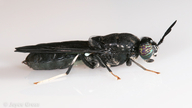
Sorry, couldn't resist the joke: Repulsive's on ScienceDaily.com Or his kind, anyway. Industrial-scale black soldier fly larvae processing: 20 million steroid-abusing maggots in their articulated armor chomping their way through a literal ton of organics every day.

Repulsive to the nth power. Still, nice to see someone trialing alternatives to burying organics in concrete-lined pits!

Tuesday, April 12, 2011

Tales from the Bucket: The Stone Soup Bucket


[image from the Florida invasive plants site]

I could work up a serious dislike of chinaberry trees. Actually, it wouldn't take too much work--the fruits are poisonous, the trees sprout like weeds from seed or sucker, and they're nearly as discouraging as walnuts when it comes to plant biodiversity in their immediate vicinity. Granted, their flowers smell nice, but that's not enough to earn their keep.

Before moving to Texas, I had never encountered the term “trash tree.” Until chinaberries and scrub elm, I'd never thought to use it. But chinaberries...well, I suppose they have their place, but there are far too many of them in my limited growing space.

Porch sweepings in this season are mainly those sticky chinaberry fruits with their hard centers, plus a few dried leaves, oak pollen, unripe mulberries, and assorted other detritus. It's not a great mix, and without serious hot-composting or some intervention, the result will have so many chinaberries-in-waiting as to be more trouble than it's worth.

Unless, of course, you're short on composts, funds, and resources altogether. Or are trying to be wholly self-sufficient in anticipation of TEOTWAWKI. Or have hungry grubs to feed...

Repulsive's active laying period has begun, but I don't have all that much to give him just now. He will not eat chinaberry fruits left to decompose where they fall, but put them in a container with a seasoning of bokashi and he'll chow down! And while the fruits are toxic to mammals, they don't seem to bug him one bit. So I swept the porch-fall into a series of flat, stackable containers--shallow dishpans--and added a cup of bokashi'd kitchen waste to each one. Bokashi plus sweepings will self-compost to some degree, though not significantly in this scenario, with so little moisture or pressure. But there is enough moisture for mama layers to consider the mix a decent foodsource, and it turns out the small volume of bokashi I used as a start, plus the occasional addition of a small bit of bokashi juice or anything else in the vinegar range*, is sufficient to keep the grubs happily chomping their way through those fruits and churning the leaves toward their natural end, with the help of EM and other IMOs.

There are already saplings appearing in this mix, so apparently chinaberries don't object to dilute acids and disturbance. But they're easy to uproot now, can be tossed right back in to provide more food for microbes and macros, and if they sprout and die now then the eventual soil amendment will not have tons of saplings. It will have a whole bunch of seeds, but after sprouting they're not nearly so pebble-hard as when they're still encased. Cooked stones are a bit softer, maybe? -G-

Being rather squeamish about Repulsive, I'm still planning on aging the grub mix and/or letting the worms have it, but it looks like it should be usable to a less grub-averse gardener in about two months from sweeping, finished enough to use as container fill for an outside planting without further intervention.

And if you weren't doing retail bokashi, this would still be perfectly feasible; a purely lacto fermentation will attract BSF layers. The current favorite among non-bokashi-ing BSFL “wranglers” seems to be fermented corn. Come to think of it, chinaberries in water might well ferment...

There is one major disadvantage to my stack-of-dishpans set-up--I do not believe Repulsive should be allowed to free-range--but now that I know the chinaberries can be useful, I'll build a case or something. The minor disadvantage, that the relatively open stacks require additional moisture, I consider a trade-off, as the relatively high rate of evaporation means I don't have to drain reservoirs of grub muck. Also, the neighbor's AC unit drips more than sufficient water onto my porch, and unless you're using clay or filters, AC water is not recommended for watering plants, so what else am I going to do with it?

Goes well with the whole something from perceived-nothing idea, too.

Are your grubs awake yet? What are you feeding them?


*vinegar, kombucha, bokashi bran mixed with water, even sauerkraut brine, if it's real kraut.

Friday, March 25, 2011

Project Restart: Hoarding Bokashi


[image from http://www.vendingmachineservices.co.uk/]


No, wait, I mean storing. Holding at a particular point until ready to use. Really. I may be something of a miser when it comes to finished vermicast, but all the other composts, plant foods, and rooting media are there to be used--I'll just make more. (Verne et cie would finish more vermicast, too, but only if I refrained from stealing their vermicompost at earlier stages. Which is unlikely.)


This winter past was unusual even for me, and there came a point when I had a bucket of mature bokashi and no post-bucket plans. No planter towers or Repulsive-and-Verne double-decker to feed; no soil conversion units; not even a bag of dried leaves.


It was not, at that point, cold enough to freeze, or I would have appropriated a filled leaf-and-lawn bag from the curbside pick-up, scooped out enough dry matter to make room for the bokashi, and then set the assembly under the porch until spring. If it had been reliably warmer, I might have stolen some worms back from one of the foster-folks and set up a new tower o'Verne. But winter in Austin being what it is, neither seemed likely to succeed.


Bokashi isn't stable at the point we consider finished. Really, it isn't even finished, though the microbes have (we hope!) wholly colonized the bucketed materials, eaten most of the available sugars, broken down some of the cellulose, and so on. My usual practice is to add different microbes at that point--thermophilic or otherwise--but if you left the bokashi alone in its closed container, it would continue to ferment awhile. After some time, the EM would die off, starved or poisoned depending, and other microbes would emerge.


Remember, bokashi works on a principle of dominance; those other microbes have always been in there, just dormant or incredibly slowed. In the absence of thriving EM, other available microbes suited to the environment take over. Those newly productive microbes might be molds, if the bokashi is on the dry side and has any air coming in, or fungi, but in a standard wettish closed bucket, what you get are the dreaded stink-producing anaerobes. I've done that, and there was no way I was going to risk it again!


But...what if you could balance the environment enough to slow everything down without adding any new elements? The dominant set would still be dominant, right?


I know from past experiments that newspaper works as a carbon source, but does not carry any of the necessary soil-borne microbes to start my usual second-stage composting. As I strongly prefer wholly composted bokashi--using the gardener's definition of the term: a product homogenous in appearance and safe to use as a primary element in potting media, as top-dressing, etc.--I hadn't bothered to do much with paper since determining that. It's useful to balance moisture in a bucket if you've got the volume to spare, won't impede the fermentation unless there's not much moisture to begin with, breaks down well enough once the composting starts but will slow the composting if allowed to clump or used in whole sheets, and there's no real difference between adding it during or after the fermentation. Overall, far inferior to dried leaves as a future-garden item, but since it's free and widely available, I expect it gets used far more in other people's buckets, and since it doesn't carry insect eggs, it's a better choice for indoor tests. (Assuming you've used all your shredded phone books, anyway.)


It might, I thought, serve to wick away just enough moisture to slow fermentation. So I split that one bucket of otherwise homeless mature bokashi between two buckets of hand-shredded paper, sandwiching each non-homogenous glob of ferment in a thick black-and-white nest, weighted one and wrapped both in plastic to ensure no additional airflow.


And then I waited. For months. I would have ended this test at the first sign of failure, of course, but when no such sign came...well, I'm lazy, and I was curious, so I let it keep going rather longer than I had planned. Almost three months in all.


The result is still a non-homogenous glob in a black-and-white nest, the weight creating a damper and more compact upper layer than the other but generally the same. It has a faintly disagreeable odor beneath a still-perceptible vinegar tang, and the pH is so nearly neutral that my standard low-tech tests don't register the difference. The literature isn't as clear on this point as I'd like, but generally tends to imply that this material would be safe to use as a subsurface fertilizer even in contact with roots at this point. To date, I have found exactly nothing about its suitability as a primary component of rooting medium for short-season crops--assuming your chosen additions addressed the stability and airflow concerns--but I figured I'd risk a few Verne-bits and a transplant or two on a real-world trial. So I scattered some vermicompost and dried leaves in the bottom of two planters, dumped my stored bokashi-and-paper atop that, then added a basic potting soil and blood-veined sorrel in one and a worm-seeded mix in the other, with a lavender.


Neither has died yet as of this posting, nor has there been a mass exodus of wrigglers, but at not quite a week from planting it's maybe still too early to say whether or not this is a success*. At least it wasn't a failure as far as the storage goes; and it might be worth trialing a bucket or two of fermentables cut into the retailer-recommended tiny pieces, fermented as usual and then mixed with cross-cut paper and sealed up again, to see how long it takes the pH to normalize that way. The resulting product still won't be as versatile as compost, but smaller bits mean less of an ick factor, and if paper and bokashi alone, in the absence of air, can be used to create a slow-release fertilizer suitable for use with food crops, just imagine how much cheaper start-up gardens might be!

--to be continued in another post, as there are a whole lot of words here and I'm not yet finished babbling. -G-

TTFN,

DSF


*First sighting of Repulsive's winged form this weekend. Not, I am happy to report, in or around either of those test planters. But one never knows what he (she, in this instance, but Repulsive is always male to me)gets up to when I'm not watching.

Sunday, March 20, 2011

Time to wake--oh, hai!


Warning: Repulsive image ahead.

.

.

.

.

...Still here? Well, at least you've been warned. Me, I had no clue. Took the lid off the rescue-attempt unit, and:


The fire and subsequent clearing destroyed my winterized double-decker BSFL-wormery; these relatively few grubs were all I could salvage, and they were sluggish with chill when I stuck them in their temporary home. Tossed in some food and some leaves so they could choose whether to eat or sleep, and pretty much forgot about them after the week of uninterrupted winter we suffered through this year; there wasn't much insulation in the improvised planter-and-weight assemblage, nor sufficient grub-mass to generate any heat worth considering, and I figured they were all either dormant or dead.

I should know better. Repulsive is as difficult to discourage as any movie-screen monster. (Not that I'm saying he's out for brains--though he would eat them if you offered! It's just that uncounted masses of quickly squirming things like King Ludwig's take on maggots rather irrestibly call cinema horrors to mind. Or is that just me? -G-)

Grub season is still officially two months away, but apparently Repulsive doesn't like naptime.

The Grub That Will Not Sleep. Does Gary Larsen write horror scripts, do you think?

DSF

Sunday, February 6, 2011

A Repulsive new blog


Raise Soldier Flies.com

As backyard industries go, this one...seems to be doing pretty well. I admit to a serious case of NIMBY--both for the ick factor and because I know from experience that BSFL will eat my compost-in-progress, and I need my compost--but this is a great new resource for people interested in cultivating waste digesters on a large home-based scale.

(Cracks me up how many of the BSF folks go out and buy cracked corn to "sour" to use as bait for the things. Apparently, that's the standard local technique.)

Warning for the squeamish: photo- and video-heavy blog, necessarily including close-up images of larvae.

Tuesday, November 9, 2010

From teh Interwebs: A Repulsive Idea


An experiment I wouldn't have done, but a question I get asked fairly frequently--now I can just tell folks to go read about Heather's Repulsive BSF Adventure.

Blecch.

Thursday, September 16, 2010

What's worse than vacation pictures?


How about bad compost-ana shots? No, I don't mean failed compost--just bad photos. Since it seems I can't keep even a really good camera alive for more than two years, nor take a single good photo in that time, I went with the cheapest little keyfob camera I could find.

Hey, if I can't see Repulsive through the tiny little coke-glass viewfinder, maybe I won't wince. As much.


This is what my tower-made vermicompost typically looks like. Unfiltered, not wet, solid enough to cake but not heavy. No worms, as they've moved up to the next planter, but though I never see any cocoons, they must be there, since baby worms hatch in the bags if I package this stuff up.


This is vermi-mud. Those folks who water their wormeries are probably familiar with this; in my case, it's the result of heavy fall rains backing up a reservoir and then some. It's been drained and drying for nearly a week now...


This is what the BSFL folks have started to call "grub pudding." I tried to get a picture that shows the little craters and all the tiny grubs still sluggishly moving, but if I didn't succeed, I don't think I'll mourn long. That blur in the lower left corner is a grub squirming toward me! Yecch. (-G-)

Grub pudding may look a lot like soggy vermicompost, but they are not the same.

The pictured pudding is finished--the grubs still present will die if I don't do anything, as there isn't sufficient nourishment remaining for them to mature, and it's too warm and too wet in that container for them to go dormant. The grubs can't process this material any further. But that isn't to say this is a finished compost.

A general-purpose dictionary might; but in a gardener's lexicon, compost is safe to use in nearly all situations and beneficial ditto. Oh, there are exceptions, plants that need to be starved and so on, but say compost to the average gardener and the matching concept is of a homogeneous, stable, variably textured but typically humus-like material rich in plant-accessible nutrients, that can be applied as top- or side-dressing, used as mulch or mixed into the soil, with no safety concerns and few contraindications.

Grub pudding is not stable; adding it to plantings will usually result in nutrient sequestration, seldom (if ever!) a desired outcome. Nor is it likely to improve soil tilth, another of compost's benefits. Grub poo is too fine to hold air, though water it can do. Then there's the nourishment concern; ignoring the sequestration issue, there are some plant-accessible nutrients, but how many and of what sort can be difficult to determine. In large part, it depends on what you fed the grubs; also, on what non-food techniques you employ. And as if that's not discouraging enough, there may be undesirable bacteria in finished grub pudding, also depending on what you fed the grubs, and how large the colony*.


Speaking of feeding. This is worm-food waiting to be fed. UCG from a coffeeshop, dried leaves from a chem-free neighbor, and AIM. Poor photo even in context, I know, but the leaves are pale thanks to mycelial bloom, beginning to break down.


This is a bokashi bag that should have been planted about a month ago. Don't know how much you can tell from this picture, but the bag is still identifiably a bag, while the materials within are well on their way to homogeneous etc. And, unlike grub pudding, nutrient sequestration doesn't seem to be an issue--I'm guessing the bokashi juice supplies nourishment to the plant for that first span.


And finally, a recipe I'm going to have to try again: one part each bokashi, dried leaves, and coco coir, fed to worms. This isn't a finished vermicast product, but a lightweight potting mix with a lively microbial profile and incredible results in my just-barely-started seedling mix tests. Not quite ready to use, as there are still identifiable bits, but that's my determining factor. Takes about a month, comparable to hot-composting, but with at least some of the benefits of vermicompost, and not so rich it can't be used straight (which finished vermicompost cannot be, as a seeding medium). This batch looks about a week away from harvest-time.

And I just couldn't resist the image with one Verne-bit too stubborn to leave. Sun had largely set, anyway, so not much light to bother him, and I don't think worms are photo-phobic in the other sense.

There really was a reason for this post, but I forget. Maybe I need a vacation...

DSF


*I don't worry about undesirable microbes, since Repulsive receives generous doses of EM. Nor is that additional processing a problem. These days, my grubbery is the top of a tower, with a wormery planter just beneath; all I have to do is harvest now and then. It's not perfect--fewer adult BSF find the unit than are necessary for a really vigorous population. if the goal is just to dispose of food, it works, but I have an experiment I've been planning for winter, and I may resort to bait bags once before the weather turns, to ensure a large enough colony.

Tuesday, August 24, 2010

Leaping Lizards!


Okay, so the Mediterranean House Gecko didn't jump--but I did. Opened the temporarily rampless grubbery and found one of these guys clinging to the side and chowing down, presumably on the baby grubs as I don't think his mouth is large enough for big ones. I was braced for the sight of disgustingly squirming banded grubs, but not in a starring role as breakfast! Yecch.

Note to self: duct tape. Since apparently plugs are not sufficient protection against intruders, though they do keep the grubs from wandering. (Of course, I could just go install that ramp, but where's the fun in that? -G-)

Queasily,
DSF


[image and species ID linked from California Herps.com
]

Saturday, August 7, 2010

Grubbing Around


Image from Hooks & Lattice, with which company I have no affiliation--but there's an anniversary coming up... (hint, hint)


Weird week here in Bucketville. Among other things, I had multiple requests for BSFL! Not all this week's requests were for grubberies, some folks just wanted grubs: To try out as feed for a particularly fussy pet reptile, for a fishing trip, and to replenish an industrial-sized retail unit from which I'm guessing there's been some over-enthusiastic harvesting, plus a pet waste disposal unit and a bird-feed "farm" (that's two separate things, at different locations, even).

So I spent Saturday morning playing chauffer to Repulsive's offspring, after a session of harvesting the disgusting things. Seemed like a good time to retire the various and sundry experiments, since 1) I've settled on a permanent design, and 2) it's a lot easier to secure a single unit against raccoon and possum incursions. Since the standard adapted bokashi-bucket design works, though it's no longer my preferred model, I just handed that one over to the folks who wanted a bird-feeder hatchery. The coir-liner test works very well, too, but I used scrounged materials for the first model, and the result was far too large for my space or needs. Rather than deal with the nightmare of separating hatchlings and feeding grubs from the exploded coir mat, I passed that on, plus such harvested grubs as I had left once all the other requests were filled, to the folks with the Bio-Pod. Hey, they asked for grubs, they didn't specify mode of delivery!

But I liked the results of the coir so much that I actually went out and (gasp!) spent money buying a smaller coir basket liner for the grubbery's permanent installation. Not just a mat to go on the bottom, a natural alternative to the synthetic mesh I've seen in Bio-Pods, but a large enough single piece of matting to cover the bottom and sides, all the way up to the single row of small holes I've had to admit are necessary for practicality.

Apparently, laziness beats squeamishness in the end--I used to set out bait bags for the layers because I couldn't handle the thought of grubs using air- or laying-holes to escape a feeding unit; but bait bags have to be emptied and refilled, not to mention protected from the cursed four-foots, and I got tired of it. Other grubbery models have pipes to let layers into the bucket, but that was way too much for me. So I watched the adults awhile, to see where they preferred to lay. Which seems to be into tiny holes with free space behind them and damp protected space just below, plus the food source, naturally. Explains why I never had much luck with cardboard laying disks: I left them too accessible. Sigh.

The only problem with the coir liner--unless one has a sudden need to harvest immature grubs in significant quantity--is that the material expands more than you might expect, reducing the bucket's effective volume. But I'd rather have a slightly larger container with no escapees than a smaller one that requires warning labels. And this is about as close to hands-free as I'm likely to get; the necessary maintenance during a working season has been reduced to feeding the grubbery, and exchanging a full catchment bottle for an empty one and hanging the birdfeeder. No draining reservoirs, no grubbing about with eggs or feeding populations, no need to remediate for moisture or carbon levels. Assuming the occasional addition of EM in some form, there's no off-odors. And almost no chance of grubs on the lid when you open it, though I can't say no risk ever of seeing the things. (Drat! And it was so close to perfect. -G-)

Probably ought to buy a new camera so I can post pictures of things. Ah, well. Repulsive's permanent home consists of:

1) A small lidded bucket with holes in the bottom and around the bottom inch of the sides, plus a single row of small holes beneath the rim.
2) A coir bucket liner reaching up to the row of holes.
3) A collection ramp, in this case half-inch tubing and threading to fasten into a soda bottle, with the part of the tube inside the bucket cut in half to create a U shaped ramp the maturing grubs can climb.
4) A largish planter filled with cheap dirt or soil-based potting mix (at least as much soil as the bucket would hold, though in a large enough planter you could mix some carbon after that requirement is met), into which the bucket is set at least three inches deep and as far down as desired so long as there's no chance of the upper row of holes being buried or completely blocked.
5) Optional but recommended, a two-inch layer of good potting mix and some plants. It looks better, but more importantly, it helps keep the predators away. Between the grubs and the worms that will move in even if you don't add any, it's a protein-rich feast--and birds, raccoons, possums, toads, and lizards have all found Repulsive in some of his less-protected iterations.

Considering what I choose to feed Repulsive, I'm going with decoratives rather than edible plants around his tower. It's not my usual preference, but I do have a few, gifts or volunteers or flowers to keep the landfolks happy, and some of those should be tolerant enough of salts and acidity to work here. (Salts from the foods; acidity more from the EM I add than anything.) If I were less squeamish, I suppose some edibles might be possible. Red orache springs to mind, but it's certainly not the only likely crop. Guess maybe I could try it. There's no requirement that I actually eat what I grow, right? Well, maybe.

And maybe there's another experiment to try: coir liner on the sides but not the bottom of the bucket. Which would allow the worms greater access to what the soldier fly folks have taken to calling "grub pudding," while still giving the mama layers their preferred egg-despoting space.

Just what I needed, more grubbing around. They do sell coir by the roll...

DSF

Tuesday, July 6, 2010

A hole above the ground


Necessity is the mother of…Repulsive 2010 beta.


My usual spigots can’t handle grubbery leachate; it's pretty nearly sludge, thinner if the filter hasn't been dislodged yet but always muddy and with fine-silt particles that clog the tap. I can’t lift a full inner bucket right now to get at the lower one to empty it (wrist injury’s healing, but not yet fixed). And letting the reservoir back up into the unit is not an option. So I set the inner bucket on top of a soil-filled planter that had once been fitted out as a wormery--which means that it had ventilation holes on the sides and bottom, plus a drip-tray beneath. Also, since Verne has no concept of personal space or respect for ancestral colony gravebins, some worms.

This largish unit has about the same volume of soil beneath as potential food-and-grub volume above, and I’m not sure I’d try much less than that; eight inches of soil minimum, if my admittedly sketchy math is correct.

So far, it’s working quite well. A few grubs have no doubt squirmed into the soil, but most of them stay near the top, that being where food comes in. (I decided not to worry about it unless or until I saw a grub using the wormery part to escape; so far, no grubs have been sighted emerging from the soil layer or hatching in the soil-packed vent holes, and the mamas don't tend to bother probing them.) It's quite possible there are worms in the grubbery's inner bucket, but that's not a problem either, and the holes are there should any aggregate bit decide to move. Leachate seeps out of the grubbery into the soil, where it serves to keep the worms fed and moistened, and since soil regulates temperature and pH, there’s no need to worry about Verne no matter what the grubbery gets up to. Too, between the weight of the soil and the nesting of base and rim, plus the inevitable-here-in-Bucketville weight on top, the grubbery’s as nearly secure as I can make it. No human-perceptible odor escapes except when it's very wet--as in, after our recent storm-cycle--and then it smells like fertile wet soil, no trouble at all. Judging by the adults flying around, happy-BSFL pheromones are being produced and food-scent is perceptible to them, since despite crawl-off there's no population shortage on the horizon, but so long as my neighbors and I can't smell it, it's a success.

I'm kind of excited: a moisture-regulating grubbery means one less chore, and one less chance I might accidentally spot one of the aggregate bits that earned Repulsive his name. Well worth the temporary reallocation of a bucket of cheap dirt! Have to say, I’m not sure how well it’d work without worms in the soil layer and/or EM in the foodstuffs. Or, ideally, both. But since I do have both, this is a workable model for me.

At some point, of course, I’ll have to do something with the unit, but with any luck at all, that won't be until fall. Lure the last layers to an alternate location, let the grubs in the unit mature and crawl off or go dormant, let the worms work the bucket over the winter, and in spring and harvest a bucket or so of rich vermidirt and worms. From stuff I wasn't willing to feed my bokashi buckets.

The obvious next step is to test this as an urban pet waste disposal; I've had some success with temporary in-ground units, but that only works where you have a hole in the ground away and downslope from your garden! Too, that was to get rid of the leavings from the neighbors' dogs. The household feline's box is a very different matter. EM, obviously, but what then? I'd thought about BSFL before, but they don't like clay, and there remained the question of what to do about the remains in the bucket once they'd done their part.

Worms were also a possibility, of course, but they can't handle fresh liquid wastes. Grubs + worms seemed reasonable, except for everyone saying how difficult it is to maintain them together.

We shall, as ever, see.


Glad to be back,
DSF


Photo courtesy of USDA Natural Resources Conservation Service , where some very odd photo categories can be found!

Saturday, May 29, 2010

It's an image thing


Lolcats are cute. Repulsive...lives up to his name. But Grubbery 2010's directions aren't too different from this. You know, except for the part where you actually look!

Happy grubbing,

DSF

Friday, May 21, 2010

The Return of Repulsive


Soldier Fly

What I learned this year: don't let him freeze. If you're willing to have a grubbery, it may as well be a year-round one. Also, way too much work to get it started up again! Though I imagine part of the problem is my refusal to let the things roam free...

Six or seven weeks ago, the early-waking grubs wandered out of their winter beds and went wherever maturing grubs go to sprout wings. (Not toward the space I occupy, fortunately!) Putting together a starter-pack for someone around March 28, I discovered that I had only a couple of dozen dormant ones left, plus the last few just waking. Didn't seem worth the effort to set up a hatchery--obviously, they'd done just fine in the leaf-filled berry punnets I'd used for winter quarters--so I left the stragglers alone to do their thing.

And in the meantime, I cleaned out the frozen grubbery, to my relief much less disgusting than had it been active, and soaked it in a strong dilution of AEM as a sort of compromise between the impulse to scour and the desire to retain some happy-grub pheromone. While I was mucking about, I converted the grubbery full of finished proto-compost to a wormery [which sounds much more involved than it was: I dumped a cup of unfiltered half-finished vermicompost in there], then confirmed that all the dormant ones had crawled away and set up bait bags to await the egg-layers.

March 30 or so. First recorded sighting of an adult: April 24th. Checked the bait-bags that day, but nothing.

And more nothing. And still more. I used bait bags all last summer and fall, to replenish grubbery populations since my unit does not provide free access for egg-layers (any hole an adult can use to get in, a larva can use to get out, and I can't handle that). Simple design: mylar coffee bag about half-full of UCG, closed, with one or more holes above but near the level of the organics. Propped up next to or behind the grubbery to take advantage of that fabled happy-grub scent. It worked very, very well all last year. But this spring? Nope.

What if I left the bag open at the top? Well, then I got flies--just not the right sort. The only thing worse than a bait-bag full of BSFL is one full of ...things... that are not BSFL. Yecch! Tried different sorts of foods with pretty much the same results, though I did achieve small populations of BSFL with cured bokashi. No idea whether predation or selective egg-laying was the cause of that less-than-boom, but a quart of cured bokashi netted me only about an ounce of BSFL. And this early in the year, those new-hatched bits of Repulsive showed no inclination to hurry up and mature so they could breed more.

Not that they should need to. The adults were flying around, they just weren't laying in the bait-bags. Or in the proto-compost wormery, though I left it open for a few days to see if they would. Apparently, there's no happy-grub pheremone if they finish their meal. Call that lesson #2. And for #3: nor is their happy-grub pheromone if the grubs die in the grubbery!

But Repulsive is endemic in my area, which is how I ended up with him in the first place. Additional pheromone signatures shouldn't have been necessary. Why wasn't he (well, his female members)laying where I wanted him????

Lesson #4. Finally got the right conditions, but it had nothing to do with me: It rained. Rain got into the various baits, and all of them sprouted BSFL as if by magic. (Black magic, that'd be. -G-) Grubs in all their disgusting multitudes, so numerous and so voracious that they went through the baits in no time. Writhing, squirming, smelly mud, just what every gardener needs! But, hey, I set out food for them, guess I really did want the things. (Why, again?) No need to tolerate the muck, now they're hatched; they're getting dumped into the grubbery, along with a whole bunch of EM bokashi bran.

And I'm going back to spritzing AEM into bagged UCG. It hadn't occurred to me that lack of moisture might be the deterrent, as UCG tends to be fairly damp, but the last set of bait bags were all filled from the same batch of collected UCG, and it was much drier than I'm used to seeing. My other baits all seemed wet enough to start with, but Austin's doing its usual summer-preview thing, with strings of 90+ and sunny days. Enough to dry out anything!

Had I put the bait(s) in a standard-model grubbery, with the access holes for egg-layers, it'd have stayed damp enough to be inviting. But, all in all, I think I'm sticking with the no-escape grubbery. Other folks have good results with barriers, but I'm just too squeamish to try it again. Ramp into bird feeder bottle for the pre-adults; bait bags for the mamas to lay. And no grubs roaming free!

He's Repulsive enough when I know where he'll be.

Happy grubbing!

DSF

Tuesday, March 30, 2010

Mucking about


Repulsive's waking (I was quite surprised to find active grubs in the dormant-grub boxes this weekend), so it's time to do something about his grubberies. Yes, that's plural--he had two last year, though not simultaneously. Unlike Verne, he is not allowed to colonize at his pleasure! I changed buckets early in the fall, as it was that or deal with the horror of emptying the "proto-compost" from an active grubbery, but while the stated intent was to let the stuff cure, and the actual intent to let any remaining grubs mature and move away, I think at this point it's just taking up space.

About three gallons of space. It's not all finished grub poo, as I use the grubberies for bone, which shouldn't yet be wholly decomposed, but the total bone volume can't be so much as a full gallon. All the rest is...not soil, but something not too unrelated to use for making mud-pies, assuming you were far less squeamish than I, or didn't know where it came from, maybe.

So if I have two-thirds of a bucket of aged soil-like material, why haven't I used it up yet? Two reasons. The first is half superstition: I'm afraid of the lure of the happy-grub pheromone! BSFL excreta is supposed to be prime worm-food, but I'm worried that if I add it to the towers, grubs will follow. A singular grub in the wormery isn't an issue, but I don't want Repulsive to feel welcome in the worm-homes. It's not so much of a concern as all that, considering that the towers are fed largely on dried leaves and there's a fair bit of soil in there, too, so BSFL wouldn't thrive, but I haven't the courage to risk it. The second reason it's still sitting around is consistency: the stuff Repulsive (ahem) leaves behind is more finely textured than espresso grounds. Far too finely textured to be of much use to me as a soil amendment, with my containers and reservoirs, though in-ground gardeners might well benefit from it.

What am I to do with it? I've used some in starter-packs, but can't make any more of those just now--the dormant grubs have awakened and left their boxes to roam uncontained! [Yecch.] Could just dump it, I suppose, use it to fill a ditch or pothole or something. It'd break down in time, but before that, might attract worms to the area. Perhaps I could dump it one of the area's unofficial dog parks, where a few BSFL would be helpful! Or, rather than carry it offsite, I could start a bog garden in a bucket or planter with rather more surface area than the grubbery, an idea I have to admit holds some appeal.

But I'm lazy, and there are so many different experiments running already! This time, I think I'll add a scoop of Verne and what happens.

DSF


today's image is from National Geographic; that's Arizona Slot Canyon mud, and I'm pretty sure there's no way to make BSFL produce anything that looks like that.

Wednesday, February 24, 2010

Tales from the Bucket Bag: This Bag Will Self-Destruct In...


So, that’d be a No on the compostable plastics for by-the-bag bokashi finishing. Or at least, a Not Suited for my particular situation. Other people may have different needs, so here’s the brief:

The compostable bags most accessible around here (all the same brand pictured above) do not respond well to getting wet--so you can’t store them where they may get rained on, and even dew is a concern. Integrity retained less than three weeks if exposed to weather, regardless of contents. For me, that’s not really long enough. And of course, if the bokashi comes into contact with the bag...well, even the retailers say they’re not recommended for use with high-nitrogen, high-moisture compostables:

We strongly recommend that wet grass clippings be left on the lawn, where the clippings will quickly biodegrade and add nutrient value to your lawn. Placing wet grass clippings in either a paper bag or a BioBag can stimulate bag decomposition within three or four days.


I’m not so sure about the fragility of heavy paper leaf and lawn bags, but these writers are if anything being conservative with their estimates when it comes to their own product. In some case, the bags just melt away into nothing; rather cool, but not of any particular use.

But if the goal isn’t to have a discrete (and discreet) bokashi-and-leaf unit, these can be incorporated into other landfill-alternative scenarios. Bentley’s had nice results feeding filled bags to his worms, and while BSFL don’t seem inclined to chew through plastic no matter its source-material, once it breaks down enough to allow access, grubs will quickly dispose of the whole thing.

DSF

Monday, December 7, 2009

The Well-Dressed Bucket


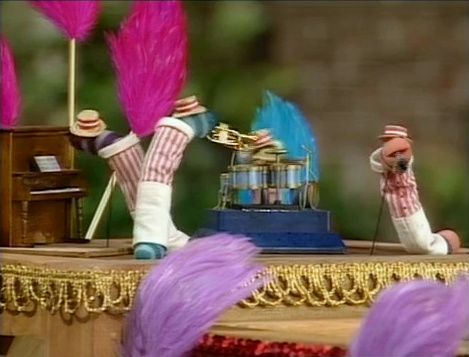
Shh. Repulsive is in disguise. The recent hard freeze made it necessary to move him into the shared laundry room, and my fellow tenants are only slightly less squeamish than I, so he's been impersonating a plant stand. Which I figured was excuse enough for the image above, from Sesame Street's Wormy Gras.

What, you didn't know Verne's kind like to dress up in costume and party? -G-

Apparently, they're not alone: Repulsive has his very own wardrobe.

I have to say, I did not intend to give him one. It just kind of happened. Saw a heavy denim wrap skirt at a box sale, neglected for its lack of style or impractical size, I don't know--but the color might have influenced me, as it's a brown not too far off from the expensive ground cloths I'd been pricing recently. Denim is a good insulator, so I figured I might as well give it a try. The nights were getting cold, you see.

That skirt turned out to be well fitted for the purpose, its construction making it simple to fasten around the bucket grubbery at base and sides, with material enough to fold over the top between feedings or fold back down on warmer days. Granted, it looked a little weird, but this is an assemblage made of two kitty litter buckets, a spigot, some weatherstripping, and, until recently, a hollow tube with a soda bottle on the end! I'm not sure there's any way the thing could be made to look normal.

First freeze warning of the season, I decided Repulsive's skirt might not be adequate. So I gave him a second layer, a lightweight synthetic blanket of the sort used on airplanes, draped over the bucket and tied into place. This must be removed in order to open the bucket, which is not a good idea for me--reluctant grub-feeder that I am, it's too easy for me to "forget" there's an option beyond tossing the bokashi-ineligible things in the garbage--but the larvae were still active after T-Day, when I unwrapped it to toss some bones and sundry items in. And temps had dropped below 40 twice by then.

The first hard freeze came this past weekend. I couldn't imagine that Repulsive's scanty winter clothing would be sufficient protection against actual frost-and-freezing winter, not for active grubs, but before taking any further measures, I figured I should see if Repulsive was, in fact, still awake. Those earlier night-time drops had been followed by warmer days, but the preceding three hadn't warmed appreciably, and the continued chill might have ended grub season already.

Might have, maybe, I'm still not actually sure. When I undid Repulsive's clothing--which sounds wrong on so many levels!--I discovered that I'd inadvertently left the lid unsealed the last time, and a number of mature grubs had chosen to wriggle through the gap and down the side to take their winter nap in a denim nest. The bucket grubbery wasn't untenanted, however; beneath the hollow shell of a cucumber was a mass of paler grubs, not moving in response to dim early morning overcast, but rousable when poked at with a very long stick. Drowsing?

On the chance they would wake to eat, I added the food I had ready, drained the reservoir, and moved the re-dressed grubbery into the laundry room. (Less the dormant ones, of course, that I moved to a proper winter bed.) That's not a heated space, but protected, anyway, and the best I've got. Stuck Repulsive in the back row, topped with a potted plant, and hoped for the best...

None of the plants have melted into slime, so presumably it remained above freezing. Warm enough for grubs? Not for peak activity, there's no creepy horror-movie rustling noise coming from the bucket, but it does seem a bit warmer (or less cold) to the touch than the planter resting on top of it. I'd open it to see, but that'd let out the heat.

Also, disarrange the folds of his shawl. -G- Though I guess I really should, if only so I know whether or not I should be shopping for some sort of grubby overcoat.

DSF

Sunday, November 15, 2009

Bucket Vision


I have become one of them. The vermimad. The composting compulsives. Those folks who whimper when they see **perfectly good organics** being tossed away. Not just the old "people are starving, don't throw away that food" mindset, but its logical (oh so extreme) extreme: viewing all not-in-current-use organics as potential nutrients for future foods. Or maybe just food for the soil.

Which would be bad enough, but it gets worse. Like the apocryphal man with a hammer, to whom every problem is a nail, I had a tunnel-vision reaction to a problem for which there really isn't One Perfect Solution For All.

Shame on me!

See, I was asked last week if it'd be possible to feed bokashi to BSFL. And I could not for the life of me imagine why anyone would want to. Waste all that lovely ferment? Guess it's better it be fed to grubs than be landfilled, but... Yep, a fanatic. Bucket-mad, that's me.

There is at least one perfectly reasonable situation wherein one might elect to feed bokashi to BSFL: where bokashi is used to divert organics from the trash-stream without increasing the frequency of trash pick-ups (whether by the municipality or some alternate entity), and no appropriate composting facility has been established to receive that ferment. BSFL don't require a whole lot of infrastructure nor space.

They might also be a way around some restrictive regulations, depending on the area--as feeding larvae could legitimately be seen as raising bait or animal feed rather than running a composting or waste disposal facility.

And bokashi + grubs could answer the Green Seal for restaurant question in urban areas, too! The requirement there is that suitable organics be sent to "a farm," but as distance between city and farmland increases, that becomes less practical--food can rot prior to or during transport, becoming unviable even as animal feed. Mixed-material bokashi is not, so far as I know, considered an acceptable animal feed. But BSFL are. Use bokashi to stabilize the food waste until pickup, then feed it to the larvae at a nearby urban location, and transport only the mature grubs to feed the farm animals.

So, once I got my sight out of the bucket, it didn't take too much for me to admit there are some situations, some times, where it might make sense to feed bokashi to BSFL. But, man, it bothers me. Somewhere in the back of my head, there's this mourning keen for all that fermented matter just waiting to be mixed with dried leaves. Or layered with landfill to rehabilitate the dirt into soil. Or spread out on the grass on the site of a future lasagna garden, topped with newspaper and a tarp and weighted down*.. Or...

Excuse me, I need to go found a twelve-bucket program. Step one: admitting there is a problem.

DSF

*Haven't done this yet, people being unreasonably fond of their lawns and unwilling to let me kill them even in a good cause. Sigh. Some day!

Wednesday, November 4, 2009

Mutant armadillo maggots


"Say, what's in that bird feeder?"

Yep.

Chilly nights, so I've pulled Repulsive's ramp-to-adulthood for the season. While the latest angled tube was not a perfect solution, this year's version had one feature I shall definitely reprise: the hands-free catchment jar. 'Cause I'm all about not having to handle the BSFL.

A soda bottle and a threaded plastic elbow joint made a perfect terminus for mature larvae, with a few pinpricks around the bottle's shoulders allow for sufficient airflow to keep them from immediately suffocating, and the dry wheat bran I sometimes remembered to include to slow them down a bit.

Still haven't found a chicken farm in need of any calcigrubs.

Leaving mature grubs in a closed system seems to upset the still-feeding ones--not to mention, it can become extremely unpleasant when they die in droves and more or less liquefy--so Repulsive's ramp is necessary for much of the year whether or not I do anything with the late-instar iterations. Leaving the bottle off the end of the tube isn't happening; setting them all free would only invite the possums and raccoons to an all-night buffet. So now and then I have a bottle half filled with grubs. I could, I suppose, bring that bottle to the landfolks' place and give their pet chickens a treat, but if the goal is just to feed birds, I have those closer to home. A whole flock of wood doves, a few mockingbirds, cardinals and assorted songbirds I couldn't tell apart with a guide...

Campfire Girls, Boy Scouts, 4H-ers and all the rest know how to make a bird feeder out of a soda bottle and a bit of wire, a plate and this and that. Or one could simply buy a feeder kit like the one pictured above (no affiliation, but it's a whole lot prettier than mine!).

Next year, I might think about camoflaging the bottle so as to hide the contents from my view. Certainly I should have thought about that before hanging one on someone else's property, though I did have permission to do so. Hadn't really thought what it might look like to the neighbors.

"Wow. Birds really like that new feeder there. Um, uh. Where'd you get that weird feed? It looks like it's...MOVING!"

Now there's a marketing strategy: Armadillo grubs. Local-grown living bird feed.

Actually, here in Austin, that might just work.

DSF

Monday, October 19, 2009

No rest for the repulsive!


Autumn in Austin, so the weather's variable--not "four seasons in one day" variable, but a forty degree difference in temperature over 24 hours isn't impossible, and the passing cold fronts don't seem inclined to settle in for a lengthy visit. Not yet. But that chilly seasonally appropriate spell we had last week reminded me that my microherd's larger accomplices will need some protection from the winter weathers presumably to come.

First, the worms. Trey and Sexton are currently accompanied by a bucket wormery (too many experiments, too few planters) and I've got a stunted third tower going as well. The recent rains forced the wriggles up into the tops of all those units, but frequent draining of reservoirs and some more dried leaves should make them comfortable again. For now. Thin-sided plastic offers no insulation, and worms don't enjoy winter much more than I. While they can survive cold temperatures (even brief freezes), they won't be converting bokashi to vermicompost if they're chilled unto dormancy.

I could bring the worms indoors--but I won't. My current favorite vermicomposting technique involves dried leaves in equal volumes to the cured bokashi. Dried leaves may include insect eggs. Not a problem outside, but in? No, thanks. Also, I'm not comfortable with an indoor unit that allows for worm escapes, and a closed unit requires far too much extra airspace to be practical for my tiny apartment.

So Verne & Co. are staying outside. I will be doing a bit of early harvesting, combining the worms to a few trays so they can wriggle together for warmth, and adding a bunch of soil. Say, a layer an inch or two deep. Soil's a great insulator, even above-ground.

But that's not an option for Repulsive. A soil layer, I mean. In fact, that's about the only thing I've found that can stop an active colony of BSFL! It doesn't kill them, nor starve them out, but few mature grubs make their way out of a soil-covered grubbery, and fliers don't tend to retun to the area, I assume due to soil's odor-suppressive qualities. The immature grubs do continue to eat, and between that and the soil microbes--assuming healthy enough soil to have any--matter will eventually be converted to plant-accessible nutrients and humus or something on its way to being so, but if the goal is to maintain an active biological "garbage disposal" over the winter, a layer of soil is right out.

As, I think, is a layer of dried leaves. I did this last winter, because I just couldn't handle the sight of that squirming mass when I opened the bucket, but grub activity eventually slowed too much to keep up with feeding. It's possible I could have emptied the bucket at that point, sorted out the grubs from the decomposed leaf matter, and started again, but I'm not into close contact with armored maggots, and so simply observed and moved on.

Dried leaves do insulate, in sufficient quantity, but I think that insulation would have to be kept separate from the feeding materials to be workable here, and with my limited space, that presents problems of its own. A styrofoam bucket won't maintain its integrity for a full season, not with an active colony inside (yes, I have tried), and while leakage might not be a problem in some situations, it's a deal-breaker here: the liquid will attract scavengers, and styrofoam is no protection against tooth and claw. Also, it smells bad, would stain wood or concrete, and depending on the concentration, could eventually kill plants or soil.

What I'd really like is a mostly buried trash can with a funnel-top and securable lid, not quite bottomless but with heavy mesh or tons of tiny holes, sunk into well-draining soil away from the water-table. But that's not happening. I've got a bucket grubbery. In the winter months, crawl off of mature grubs is greatly reduced or even stopped, so I'll be pulling the Ramp of Death's exit tube and plugging the hole for warmth, then wrapping the bucket in something insulating.

Will that be enough to keep him warm and chomping? Time will tell. BSFL generate heat, so it's not as if I'm relying solely on ambient temperatures, and I've noticed that regular feeding, even of smaller quantities, seems to encourage feeding... Maybe I'll try feeding him hot meals. The next time anyone offers me any Cream of Wheat.

What, you didn't think I was planning to cook for the grubs, did you? I'd almost be more likely to cook them! And you know that's not ever happening.

DSF

image from CartoonStock, in honor of Andrew and all the other grub wranglers who may well reach this point with "food waste" before too long.

Friday, June 19, 2009

Tales from the Bucket: Stirred but not shaken


After dividing up a bucket of cured bokashi into planters for worm-food, I had a bit left over; homeless bokashi. And it wasn't long before that I'd first read the post about direct-to-bucket composting, so an impromptu test commenced: I tossed a couple of inches of dirt on top of the remaining cured bokashi and stuck the lid on.

Then opened it a couple of days longer and stirred. And again a few days after that.

This stirring in no way disturbed the BSFL that appeared as if by magic to devour the ferment despite its earthen blanket. While a heavy soil layer is supposed to control BSFL populations, it does so by preventing sufficient crawl-off for further generations. The ever-hungry youth don't seem bothered at all, and are apparently happy enough to give off whatever chemical signature encourages egg-layers to seek entrance.

While this bucket had been full of curing bokashi, I'd kept a weight on the lid expressly to prevent such entrance, but since the original post suggested leaving the bucket open as needed, I didn't weight this one. Should I repeat this test, I think I will--as it is, while the matter is certainly disappearing and the soil is visibly refreshed, I can't say if there's any actual composting going on at all. Eating and digesting, check.

Appropriately enough for bokashi, this particular bucket started life as a container for pickles. If I needed another BSFL colony, I think I'd name him Martin. -G-


DSF

Sunday, June 7, 2009

Direct-to-Bucket Soil-Based Composting?


Another entry into the balcony compost sweepstakes. (Sorry, no monetary prize, just all the compost you can produce. -G-)

I haven’t tried this yet. Between the site name and the mention of BSFs, I’m assuming the writer lives and practices this odd form of composting someplace warm. And it might well be feasible someplace sufficiently warm and dry, though I imagine there’s a fair risk of spoilage even with frequent turning. Vegetarian-only, naturally.

I have tried to compost bokashi in soil without bottom drainage, and the result was not appealing, but I didn’t try weekly turning. Hmm...