Wednesday, May 13, 2009

Smoke test


I've always loved that phrase, proof that mechanics and engineers can find humor in things other than the bills they charge me. -G- This week, I got to see if a few of my experiments were going to blow up. Or whatever.

BSFL

Repulsive v.2

Take your basic nested-bucket bokashi set-up, add a mesh layer to keep the SF-nal maggots from falling into the reservoir, drill holes in the lid and upper sides a la the jr. wormery conversion, and then insert two hollow metal poles to provide the required 40-degree-angled ramps for teen grubs to climb.

Though I don't actually recommend doing this, at least not that last step. Turns out this season's bucket-tweak is not pest-proofed yet. I knew those ramps were going to be a problem, but hadn't really thought they might be used as levers. Imagine the raccoons and/or possums waddling away, burping...

Interim solution is to take the ramps back off and weight the lid. New grubs have hatched and are eagerly eating, but I have work to do!

VERMICOMPOSTING

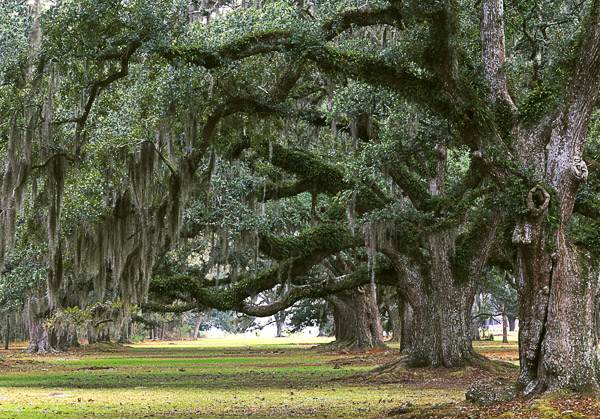
Verne Prime has been retired; traditional vermicomposting is too much work for me. But I've got more worms than ever before (and yes, that is a good thing). So let's bring the smudge pots to my "worm towers," Trey and Sexton. Same basic design for both: spigoted reservoir at the base, nested plastic planters with a bit more drainage than usual for plants, screws with anchors inserted in the sides to keep the layers from compacting, planter with soil and plant on top. Spanish moss wedged into the sides to help secure the layers as needed, and used as mulch for the plant. Sexton uses larger pots and more of them, and the screws are set higher to use more interior volume of each planter.

My midnight freeloaders must not have been too pleased with this design, though I am--the comparatively squat Trey was perfectly unscathed, and Sexton, which is a bit more open, was disturbed but not much discommoded. Not upended, not emptied, they didn't even disturb the soil, far less the plant in it. 'Coon or possum claws did manage to pull out the moss-wedging from one layer, and no doubt the thieves ate whatever worms they could reach through that space, but the bulk of the wriggle (that is the right collective, yeah?) remained safely in the feeding layers.

It does reinforce the caution, however, that the towers must be stable! The weight of soil and plant on top has so far proved sufficient, but I've only got a couple of levels in place right now. I had decided against a center pole for extra anchoring as I thought it might be messy--this way, planters can be easily removed and replaced with no risk of spilling--but may have to rethink that. We shall see.

BOKASHI + VERMIES

Bokashi and dried leaves together heat up too much for direct addition, and there's too much heat to put in the relatively small towers even with an empty layer between the uppermost active feeding layer and the new addition. So I think there has to be a separate container or spare planter that can be secured top and bottom against insects and larger pests, and left to rest at least four days.


Can't report on how long it takes the worms to completely devour a batch of bokashi + dried leaves, as they're still working on it, but they're multiplying like their little wormy pants are on fire! So I guess they're happy.

Monday, May 11, 2009

Beyond the Corral


Wastewater folks call it FOG: fats, oils, and grease. One of the major causes of sewage blockages, which release pollutants, interrupt service, and are incredibly expensive to clean up, FOG is more even of a concern now than ever, between older infrastructure, increasing demand, and, unfortunately, certain water-conservation methods.

Some municipalities have programs to collect household FOG waste for conversion to biodiesel. Mine... does not. Austin and Houston recommend that residents throw their waste grease and oil in the trash.

Need I say that I'm not pleased by this?

Oddly, despite the municipally sanctioned advice to trash all FOG, the City of Austin does, in fact, accept used oil and cooking grease at one location--and, according to the website http://www.ci.austin.tx.us/sws/dispose_oil.htm , "Oil collected will be reprocessed into biodiesal [sic]or other environmentally-friendly products such as soap."

So, no collection service offered, but if you're sufficiently motivated to add some road miles to your conservation efforts, they'll take care of the rest. Does this seem a bit strange to anyone?

Zero Waste is a long, long way away!

What does this have to do with bokashi? Not a thing, directly. But those grease-soaked paper towels can go in the bucket instead of the trash, and bokashi juice--the microbe-rich effluent produced during fermentation--helps keep drains clear. As for the larger quantities of grease and oil, if you're sufficiently mechanical, you might make your own bio-diesel, or candles, bird-feeding bars, etc. Hey, what about bacon soap?

...you know, assuming your kitchen generates sufficient bacon grease for that.

Friday, May 1, 2009

...never mind...


Squeamishness is still an issue. As for the rest... Turns out I really should be putting the bones into the bokashi. Or a wormery or a BSFL bucket with a dose of EM. Or one after another.

How do you speed up the breakdown process of bones? 1. Moisture. 2. Heat 3. Acid. 4. Soil-borne bacteria.

Sounds familiar, no?

DSF

Friday, April 24, 2009

I am not an archaeologist


Nor a gravedigger. Nor any other sort who might be expected to take finding bones in the soil in stride. The odd deer skeleton in the woods won't faze me, but in a planter? Thanks, but no. Which is why I no longer put bones in my bokashi. I do have these oddly squeamish turns, and just couldn't get past the idea of pulling up my sweet potato harvest to find a T-bone in the tubers.

If I had someplace to bury them where they wouldn't be disturbed, of course...but that requires land, so it's not an option for me. Not that I have all that many bones to dispose of, and I do tend to make stock with a bit of vinegar to leach the calcium, so how many potential soil nutrients would I really be throwing away? Cleaned bones probably don't produce much methane in the landfill, either. But it's the idea of the thing--I'm not quite at the point of carrying home food wastes to feed the buckets, but not far off, and throwing away anything I know could be used to replenish the soil just seems wrong.

(Though it does still happen. Confession time: I threw away nearly half a head of cabbage yesterday. Put it in the trash! It had fruit flies, you see, and my freezer is tiny and full of food; no way to freeze the winged pests so Verne could have red leaves. Nor was I willing to risk upsetting the balance of either the new bokashi bucket or young Repulsive by adding infested material. Or the apartment's shared outdoor compost bin, which so far, surprisingly, hasn't had any insect problems worth mentioning.)

So what to do with the bones? Repulsive cleans bones, but does not apparently devour them, so that's no solution. Verne won't help there, either. The household feline only occasionally deigns to consider people-food, preferring expensively canned glop, but even were she willing, I was raised on horror tales of cats and chicken bones and so wouldn't take the chance. I suppose an industrial mulcher might convert bones to meal, but as I don't happen to know anyone who has one of those...

What I probably ought to do is toss the bones into Repulsive's bucket, then fish them out during harvesting and stick them in a designated no-root-crops-here planter. Under some sort of thrifty perennial, perhaps. But I'm not too happy with that idea, as it requires additional contact with Repulsive.

For now, I think the bones are going in the trash. While I work on this latest burst of squeamishness, and possibly do some research. There's this kid-science experiment they do in schools where they submerge teeth in Coca-Cola to watch what happens. (Do they still do that? Ah, well.) Surely there's some way to speed the breakdown of bone matter beyond the softening that occurs during roasting and stock-making; is there a technique that might work in an EM bokashi bucket, or a wormery? I don't need instant dissolution, but within a growing season would be nice.

Bones are just not what I want to harvest!

DSF

Tuesday, April 21, 2009

Where does he think food comes from?


Haven't posted much lately, I know. Sorry. Health issues in part, plus the fact that it's just been too pretty to be at a keyboard even if I had bokashi-related things to post (which this post isn't, so don't say I didn't warn you). And then there's the fact that it's loquat season.

Don't know the loquat? You're not alone. Here in the US, this delicious fruit is a sadly under-appreciated "backyard crop"; if you don't grow it yourself, chances are you won't ever have the chance to eat the things. Except possibly canned and imported from another country.

(Oddly, Texas chain grocer HEB carries loquats in syrup in its upscale house brand. According to the label, it's a Product of Mexico.)

This relative of roses and apples is delicious raw or cooked, and here in Austin, is easy enough to grow that many people--sadly, not including me!--can harvest bushels of fruits even from potted specimens. Given a sunny spot in the ground, fruits are nearly inevitable. Even in drought years. That photo above is a fair representation of a tree/bush in fruit; seasonal abundance in spades!

But people here don't eat the things. Sold as a zone-hardy evergreen ornamental, nursery and catalog listings tend not to mention the fruits at all. The word "edible" almost never appears on labels. And as far as which species makes the best fresh-eating or cooking use, forget it. Why should growers bother to include that information? It's not as if anyone grows them for the fruit...

I have a dozen or so tested and proved loquat recipes, and friends with loquats and freezer space, so I've been playing in yards and kitchens all over the city. Have a tree with ripe fruits? Great! I'll be right over. Let me take some home, and in exchange I'll fill your freezer, oven, food drier, etc. Really. Anything to avoid having to see those yummy fruits rotting on or beneath the tree.

Jonathan Bloom over at Wasted Food promotes community-based gleaning. A great idea! But though I wish it would, I don't believe it would work for loquats. Like mulberries, loquats are simply not considered worthwhile, here, as a food, even by most of those who know they can be eaten.

I've been trying to wrap my head around that for years. Mulberries, I can kind of understand, more or less, if I try--depending on the species and growing conditions, they can be rather bland. (Though they're an easy way to add sweetness to baked goods, and mulberry "raisins" are surprisingly tasty additions to a great many recipes.) But loquats? Delicious, sweet-tart, juicy Japanese plums? Lovely sunset-colored biwa? Incredibly floral-fruity Chinese Medlars? How could anyone choose not to eat these?

Doesn't matter what name you give them, the attitude here doesn't change. I'm hoping Frieda's or some similar exotic-foods emporium will adopt the things, because last year, someone finally articulated the problem in a way even I can understand:

"If it was food," he told me, sneering as I offered him a freshly-picked loquat half dripping with juice, "it would be at the grocery store."

Worms eat my bokashi!


Trey’s still doing well. This outdoor planter-topped flowthrough wormery is the first of my experiments in feeding worms cured bokashi, though others (including Bentley, naturally) have done it successfully. I knew from reading about those other folks that material heating would be a concern--and it’s one I haven’t yet solved for indoor use! But outside, so far, allowing the heating process to take place in a shelf below the soil layer and above the one where worms are currently eating seems to be working.

In fact, Trey’s going through the bokashi faster than I’d expected. This is a very good thing, as I’m always looking for more finished material, and particularly for some way to convert cured bokashi into matter I can use for top-dressing container plants. Unfortunately, Trey is too small a unit to handle additions of more than about a gallon of well-cured bokashi at a time (plus dried leaves); no finished calculations yet on bucket-to-worm bin volumes, but...I’ve got to get that second tower wormery assembled this week.

The new tower will be taller; I need more layers than Trey has, and a taller tower will get more sun on top--the urban-gardener thing again, I’m trying to use spaces that get only such sun as can angle between buildings. Shaded lower layers should help with the heat issue, too. The weather-folk say it may hit 90 degrees today, thus beginning our ramp-up to summer; heat is a concern even without thermophilic reactions.

After our recent and much-needed rain, Trey developed an outbreak of gnats, but they’re already fading with the heat; the Spanish moss I’m using for mulch and wadding is more discouragement than prevention, and not even that when wet. Which is fine for an outdoor wormery, but not at all acceptable inside! So an indoor tower will have to be constructed with no least gaps at all between layers. That’s fine; I’d prefer a unit that didn’t allow the worms too many chances to go wandering.

(Just now, there’s a lightweight drawstring bag over Verne, to allow airflow through the ventilation holes while, hopefully, containing any kamikaze worm. Not that I’ve got any of those--Verne seems willing enough to remain beneath the newspaper cover layer--but in case. I really don’t like having to trust worms’ free will to keep the worms inside the bin. Not in my kitchen!)

Next on the agenda for Verne et familae? A few different “recipes.” I know how much food a wormery can be expected to handle at optimum: half the worm-weight per day. But Trey’s food is made up of cured bokashi and dried leaves, which means that the food is composting to some degree even without the aid of the worms. What’s the ideal ratio of leaves to bokashi for happy worms? Will shredded household paper get bokashi past the heating stage as successfully, break down as quickly, sustain the worms? Would old bills and fast-food wrappers plus bokashi heat and cool without producing the dreaded off odors? And what about those worm-verboten items?

Yes, it has come to this: I’m a personal chef for worms. Not too surprising, I suppose, after months of feeding buckets, and somehow, I can’t bring myself to be upset by it; all the gorgeous produce I’ve been harvesting must be mellowing my mood. And the promise of more...

DSF

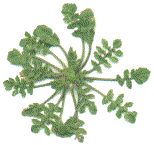
Trey is topped with a little-cultivated plant called Shepherd’s Purse, as in the photo above

Tuesday, April 7, 2009

Success?


I don’t know yet if bokashi + vermicomposting is the perfect, complete indoor composting solution. I don’t know if, in the long term, worms will thrive on fermented versions of foods they find unacceptable in their fresh state. I don’t know if adding cured bokashi to an indoor wormery is even feasible in extreme climates--like an un-airconditioned kitchen during a Texas summer.

But I know that the outdoor iteration of Verne fed on bokashi is going well. For now. In fact, Trey seems to be doing better than Verne Prime or Junior. Interesting...

Experienced vermicomposters have been adding bokashi to their wormeries for some time, so I knew it was possible, but with caveats: Bokashi will heat up if added directly to a wormery, and the pH of freshly cured bokashi is at the extremes of worm tolerance.

Most of the folks who successfully feed their bokashi to their wormeries have outdoor units on the large side, with space enough to let the worms move away from heat and acidic additions until they decompose. I can’t offer Verne (in any of his generations) that option. So I was worried. Was I about to cook yet another bunch of worms? Would they eat their bedding and then starve rather than consume bokashi containing fat and garlic and the peels from half a dozen different kinds of citrus? Would the raccoons or possums or early blue jays devour Trey en bokashi?

So far, at least, Trey’s unit is working. A homebrew version of a retail unit, Trey is a plant-topped flowthrough constructed from a series of twelve-inch round plastic planters. Each feeding layer has about six inches of interior volume, filled with more or less equal parts dried leaves and well-cured bokashi. The bokashi heats up when dried leaves are added, but hasn’t the volume to sustain that reaction for long; by the time the worms work their way up to it, the bokashi should have cooled.

As yet, I don’t know how Trey will react to specific items within the bokashi--it’s too soon to tell anything except that he’s alive and wriggling in the feeding layers--but it does seem promising. Promising enough that I’m wondering if I can retire Verne Prime! Towers of planters topped with growing plants are a much better use of my space.

I’d keep my fingers crossed, except that’s hard while digging in the dirt. Or typing.

Fervently fermenting,

DSF

[the Spanish Moss is because it’s in Trey’s design. I’d post a picture of Trey instead, but my camera ate its last set of batteries.]